Travel, Food comments edit

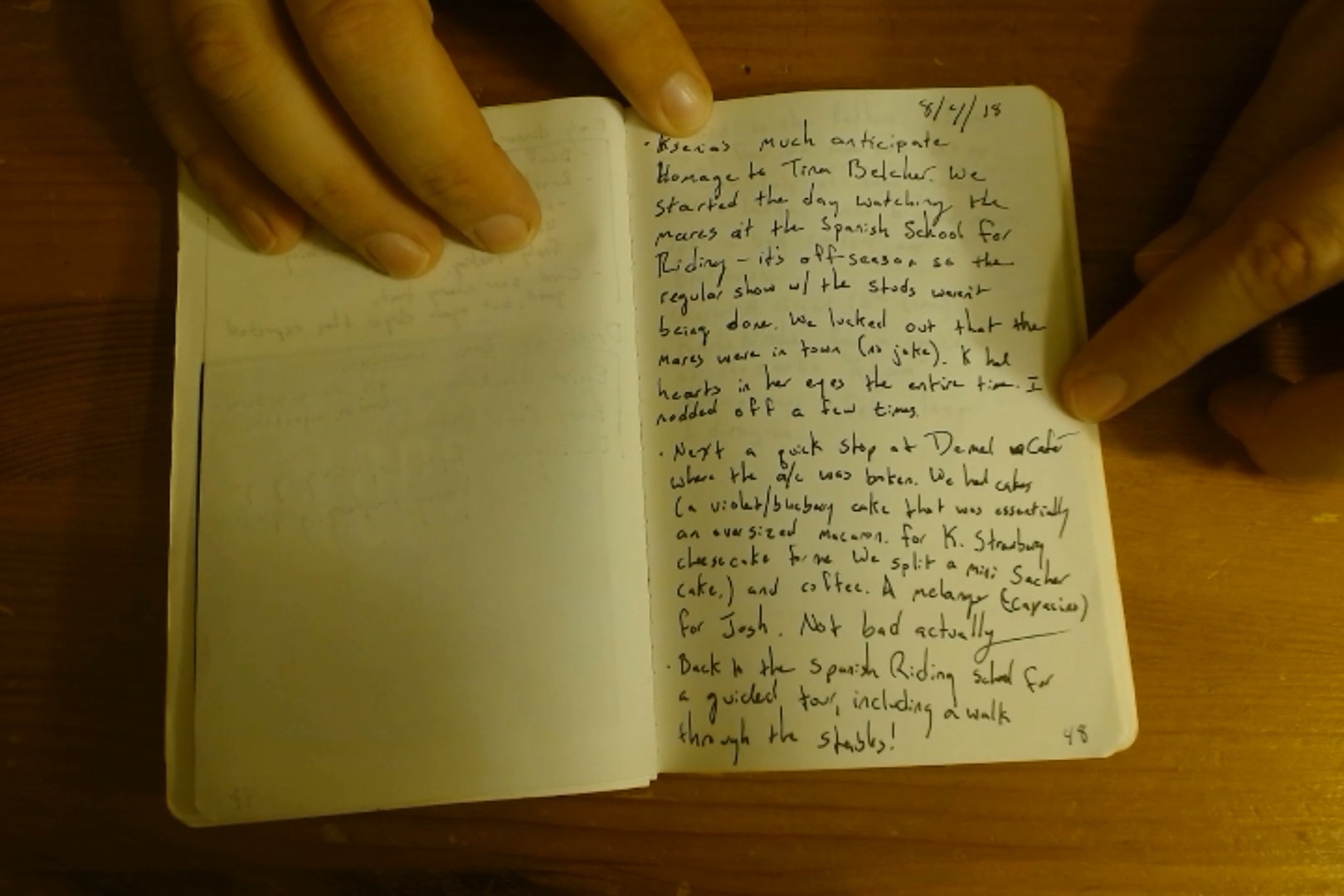
Ksenia’s much-anticipated visit to the Spanish Riding School came first. The regular show with the studs was off-season, so the mares were in town instead. Ksenia had hearts in her eyes the whole time. I nodded off a few times.

At Demel, the coffee was better. Ksenia had a cake that was essentially an oversized macaron; I had strawberry cheesecake. We split a mini Sacher cake and I had a melange. We went back to the Riding School for a guided tour and a walk through the stables.

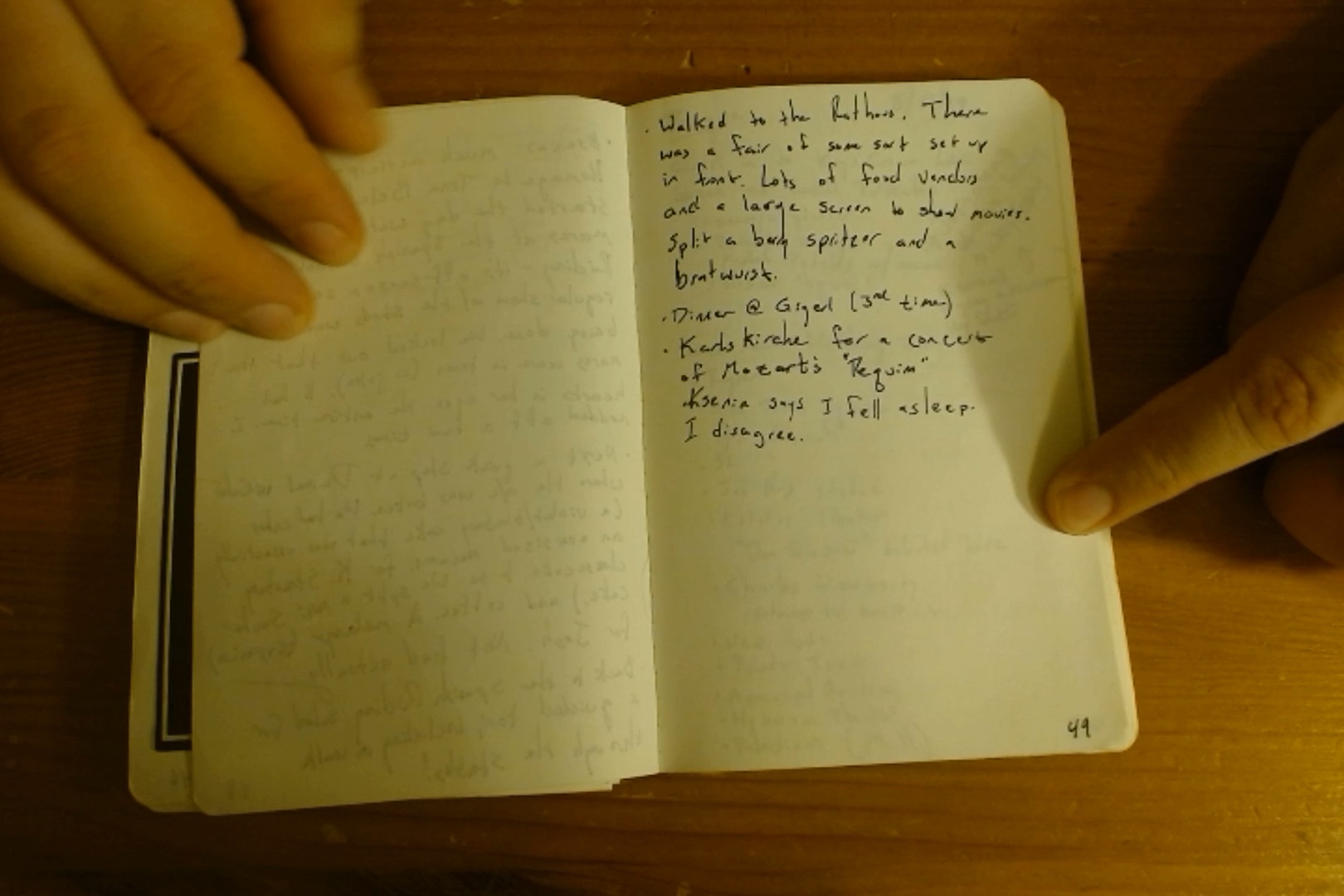
Outside the Rathaus, a fair had food vendors and a screen showing movies. We split a bärg spitzer and a bratwurst. Dinner at Gigerl for the third time, then a concert of Mozart’s Requiem at Karlskirche. Ksenia says I fell asleep. I disagree.

Trip summary and all the daily posts

From the Notebook

Notebook page 48, 2018-08-04 Notebook page 49, 2018-08-04

Travel, Food comments edit

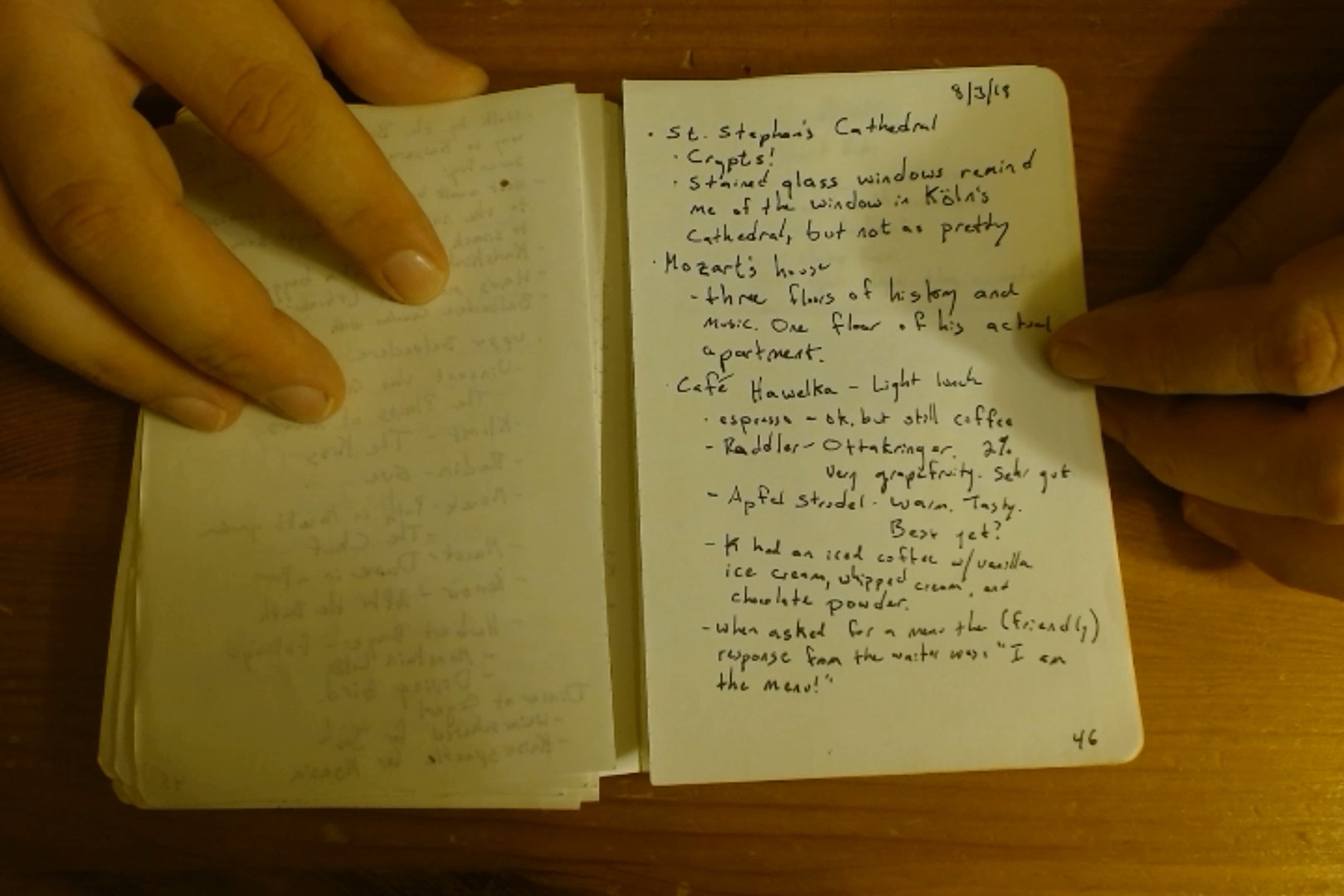
We climbed into the crypts at St. Stephen’s Cathedral. Some of the stained glass had survived; the rest was less pretty than Cologne’s cathedral. At Mozarthaus, three floors covered Mozart’s life, history, and music, including one floor of his actual apartment.

A light lunch at Café Hawelka brought espresso that was okay but still coffee, a very good radler, and apple strudel that was warm, tangy, and maybe the best yet. Ksenia had iced coffee with vanilla ice cream, whipped cream, and chocolate powder. When I asked for a menu, the waiter said, “I am the menu!”

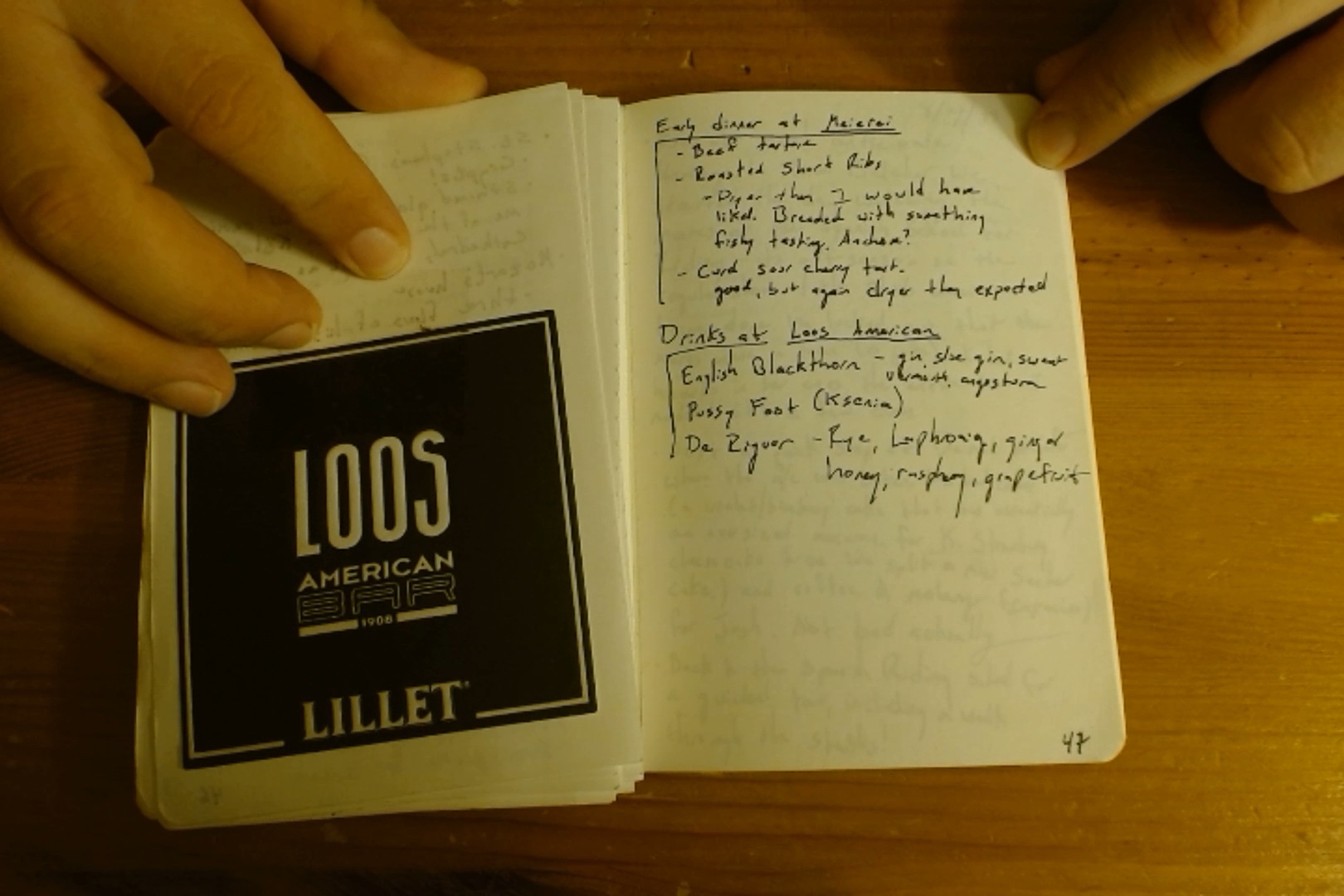
At Meierei im Stadtpark, we had beef tartare and roasted short ribs. The ribs were drier than I expected; the sour cherry tart was good. At Loos American Bar, I had an English Blackthorn and a De Rigueur; Ksenia had a Pussy Foot.

Trip summary and all the daily posts

From the Notebook

Notebook page 46, 2018-08-03 Notebook page 47, 2018-08-03

Travel, Food comments edit

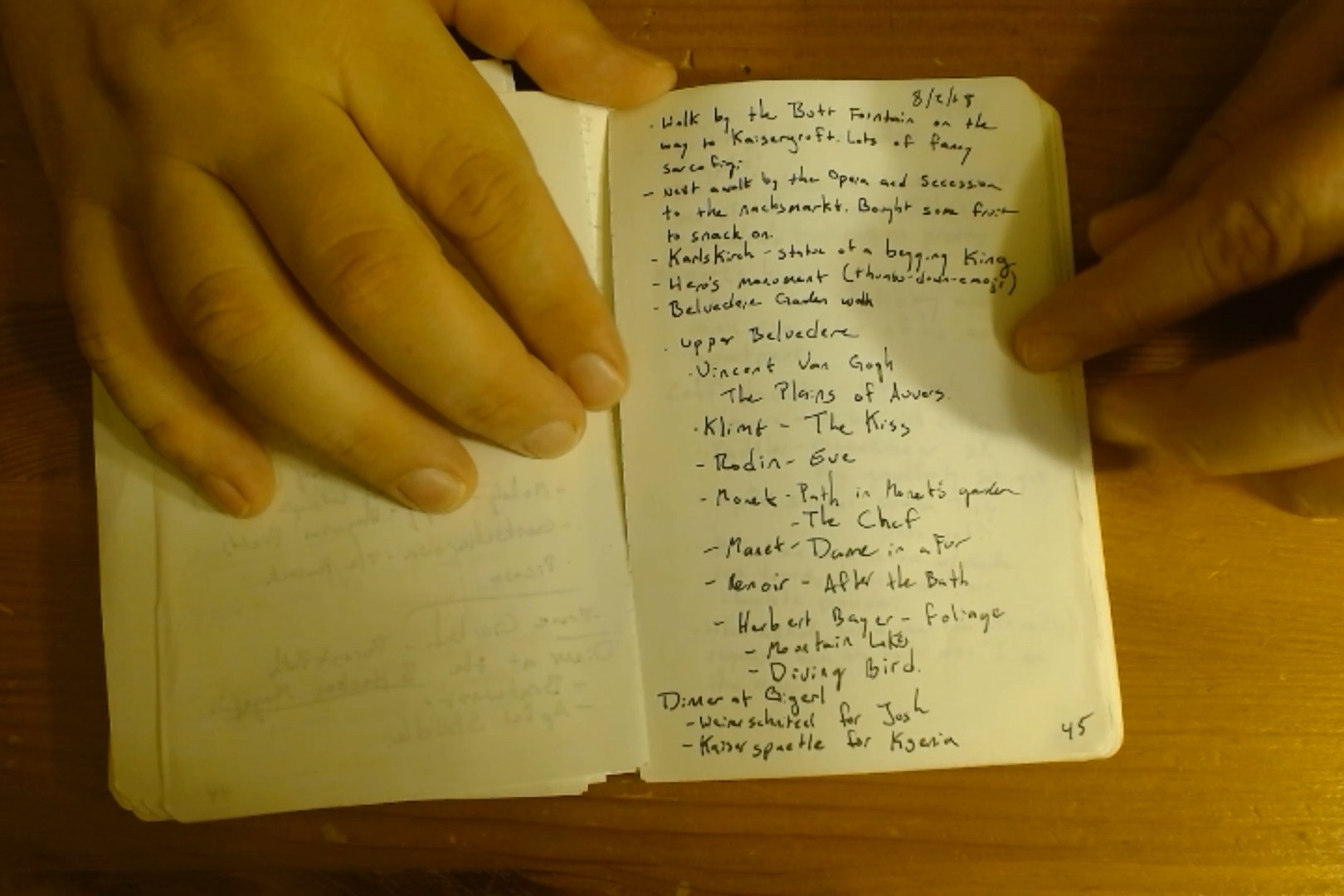
We walked past a bust of Franz Joseph I on the way to the Schönbrunn Palace. Next came the open-air opera and food market, with a snack from a stand, then Karlskirche and its statue of a begging king.

At the Belvedere, we saw van Gogh’s The Plains of Auvers, Klimt’s The Kiss, Rodin’s Eve, Monet’s Path in Monet’s Garden and The Chef, Manet’s Dame in a Fur, Renoir’s After the Bath, and Hubert Bayer’s Foliage, Mountain Lake, and Diving Bird.

Back at Gigerl for dinner: Wiener schnitzel for me and Kasnspätzle for Ksenia. Then a Mozart concert at Karlskirche. Ksenia says I fell asleep. I disagree.

Trip summary and all the daily posts

From the Notebook

Notebook page 45, 2018-08-02

Travel, Food comments edit

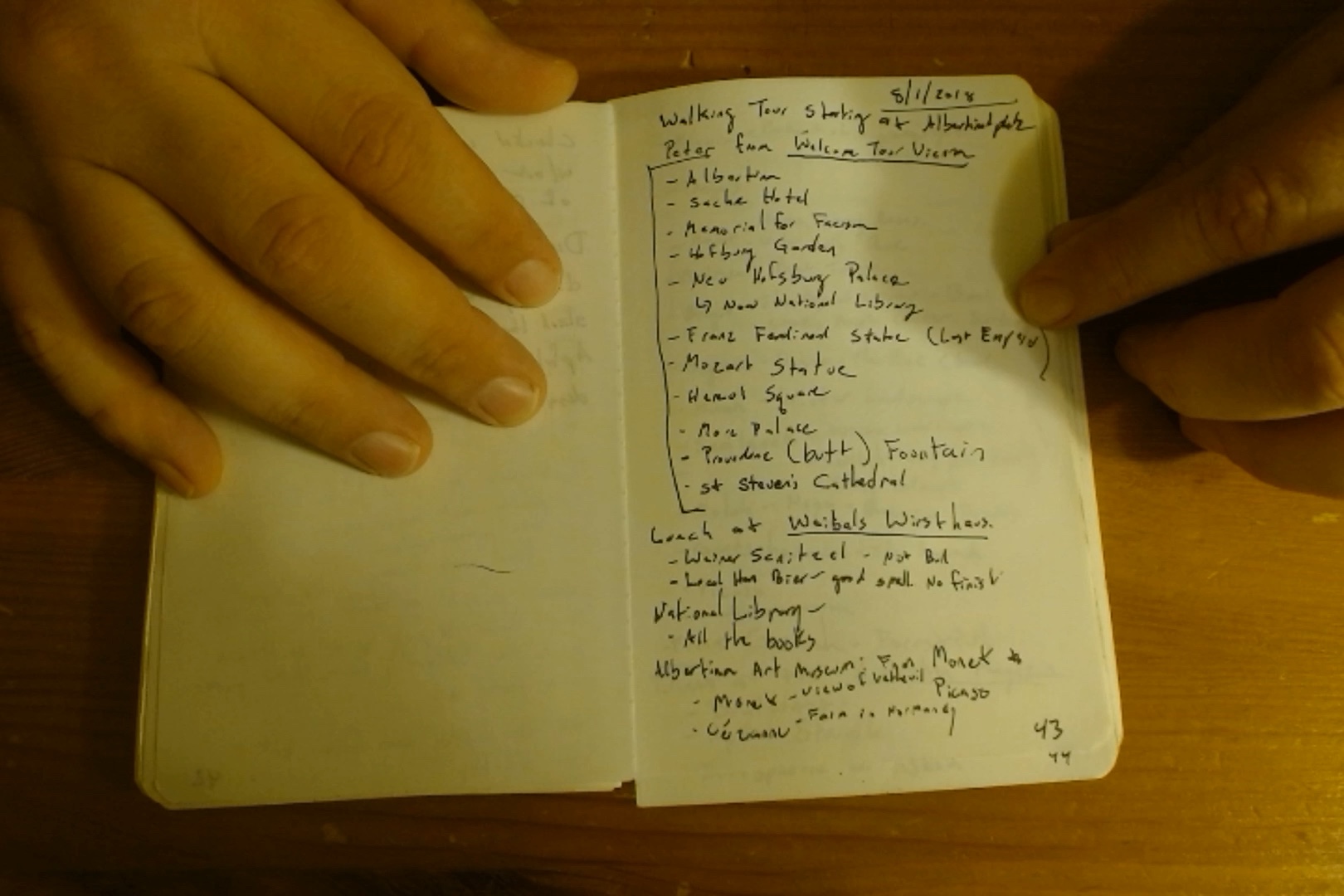
We started a Vienna walking tour at Albertinaplatz with Peter. The route went through the Albertina, Sacher Hotel, the memorial for fascism, Hofburg Garden, Neue Hofburg Palace and the National Library, Maria Theresa, Mozart, Heldenplatz, St. Stephen’s Cathedral, and plenty more.

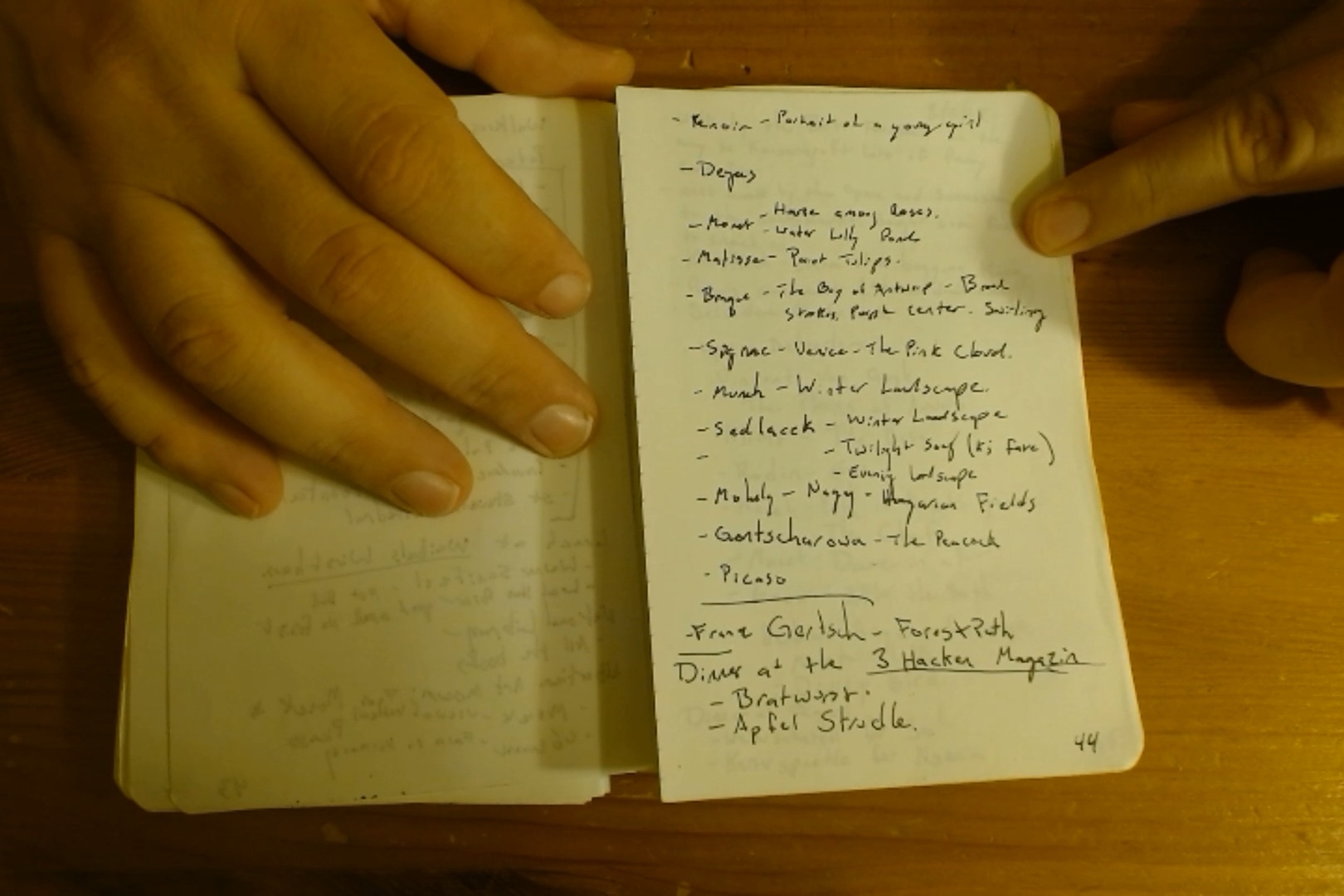
Lunch at Weibel’s Wirtshaus was Wiener schnitzel—not bad—and a local beer with a good smell. We also visited the National Library. At the Albertina we saw Monet, Picasso, and Cézanne, among others: Monet’s water lilies, Venice’s pink clouds, and a watercolor landscape that stuck with me. Dinner at Zu den 3 Hacken was bratwurst and apple strudel.

Trip summary and all the daily posts

From the Notebook

Notebook page 43, 2018-08-01 Notebook page 44, 2018-08-01

Travel, Food comments edit

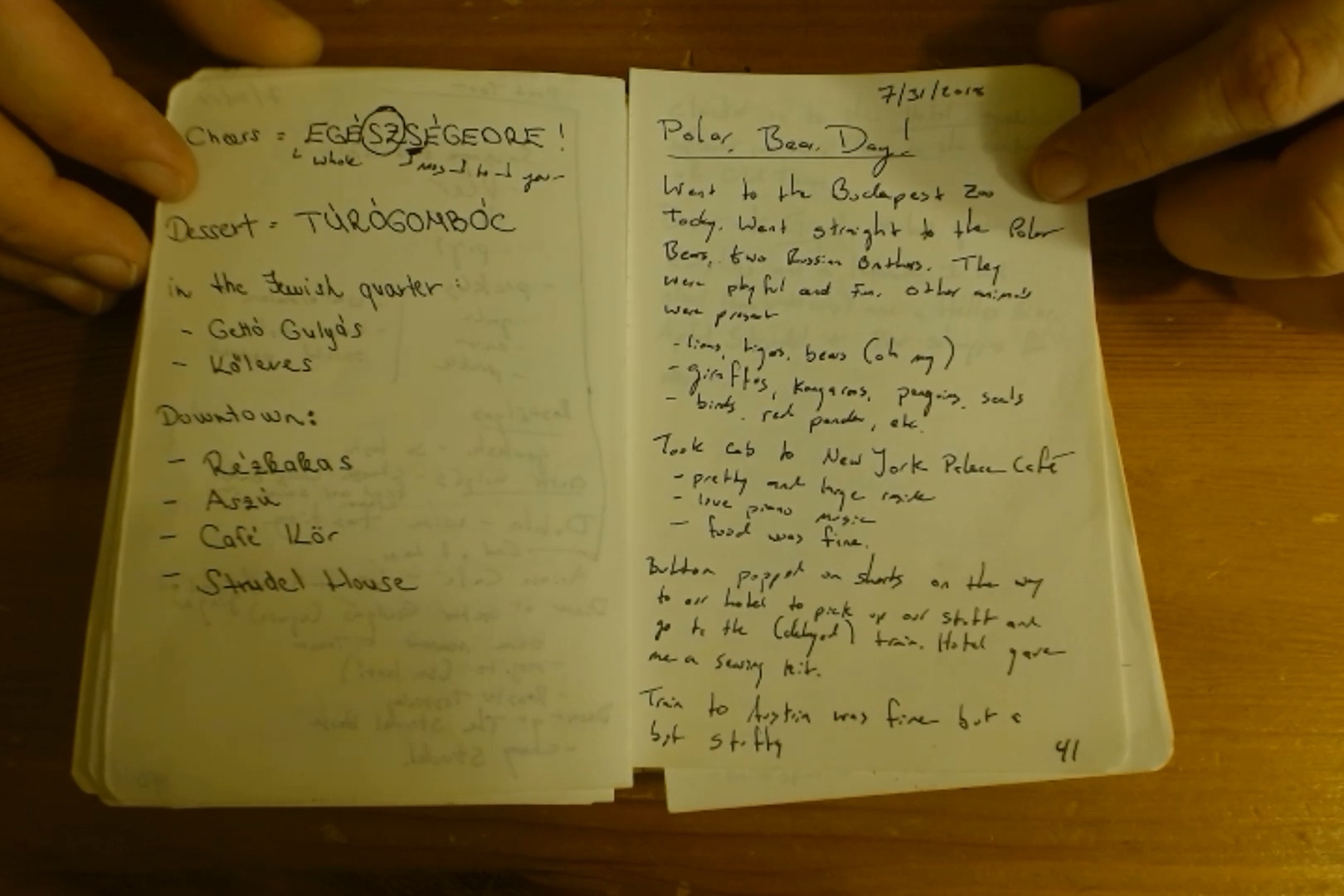
Polar bear day! At the Budapest Zoo, the two Russian polar bears were playful and fun. We also saw lions, tigers, other bears, giraffes, kangaroos, penguins, seals, birds, red pandas, and more.

We took a cab to the New York Café: a pretty, enormous room, live piano music, and food that was fine. Then Ksenia put on shorts on the way to the hotel so she could change for our train. The hotel gave me a sewing kit. The train to Austria was fine, if a bit stuffy.

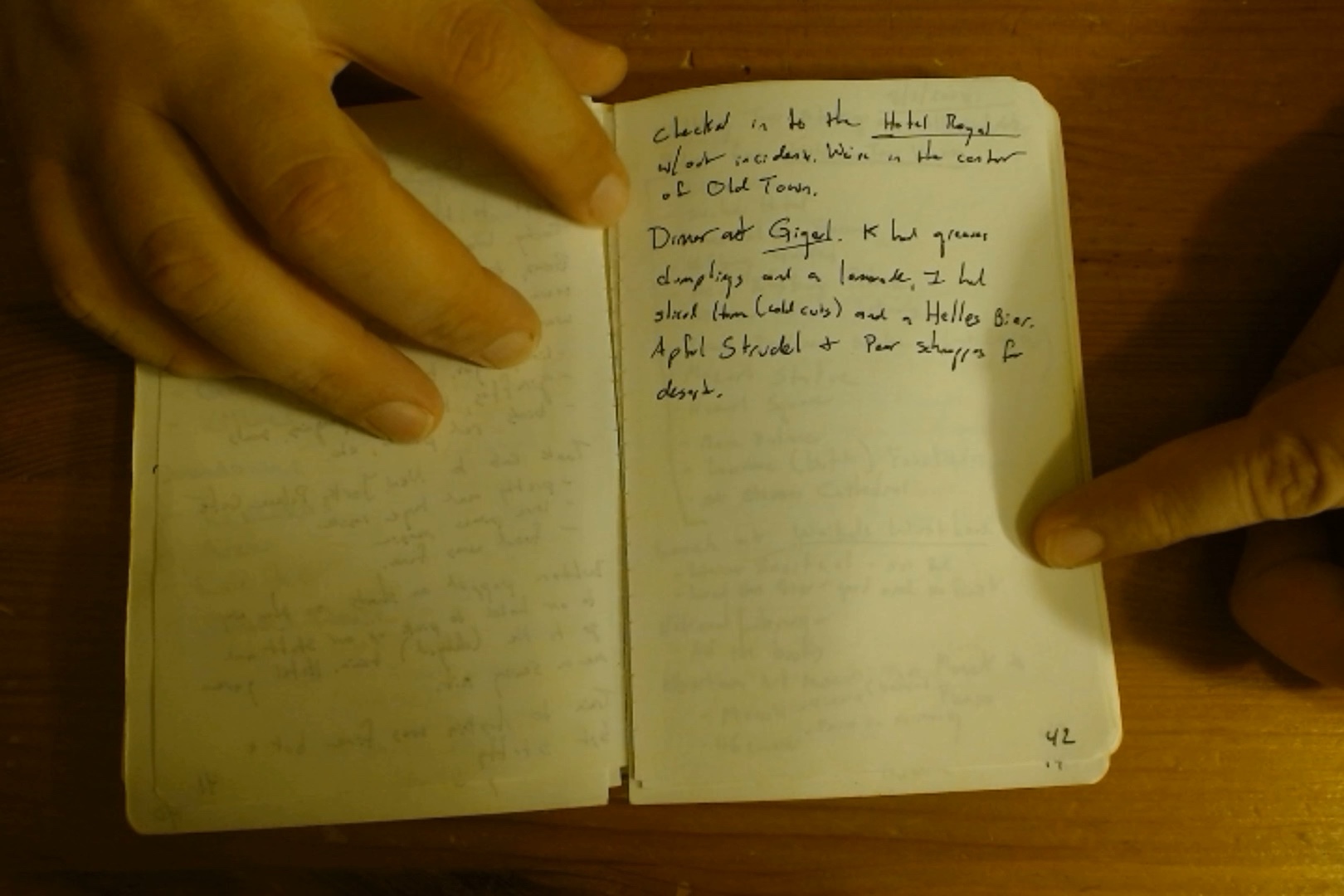
In Vienna we checked in to the Hotel Royal, right in the center of Old Town. Dinner at Gigerl was Ksenia’s big green dumplings and a lemonade, and my salad, Helles beer, apple strudel, and pear schnapps.

Trip summary and all the daily posts

From the Notebook

Notebook page 41, 2018-07-31 Notebook page 42, 2018-07-31

Travel, Food comments edit

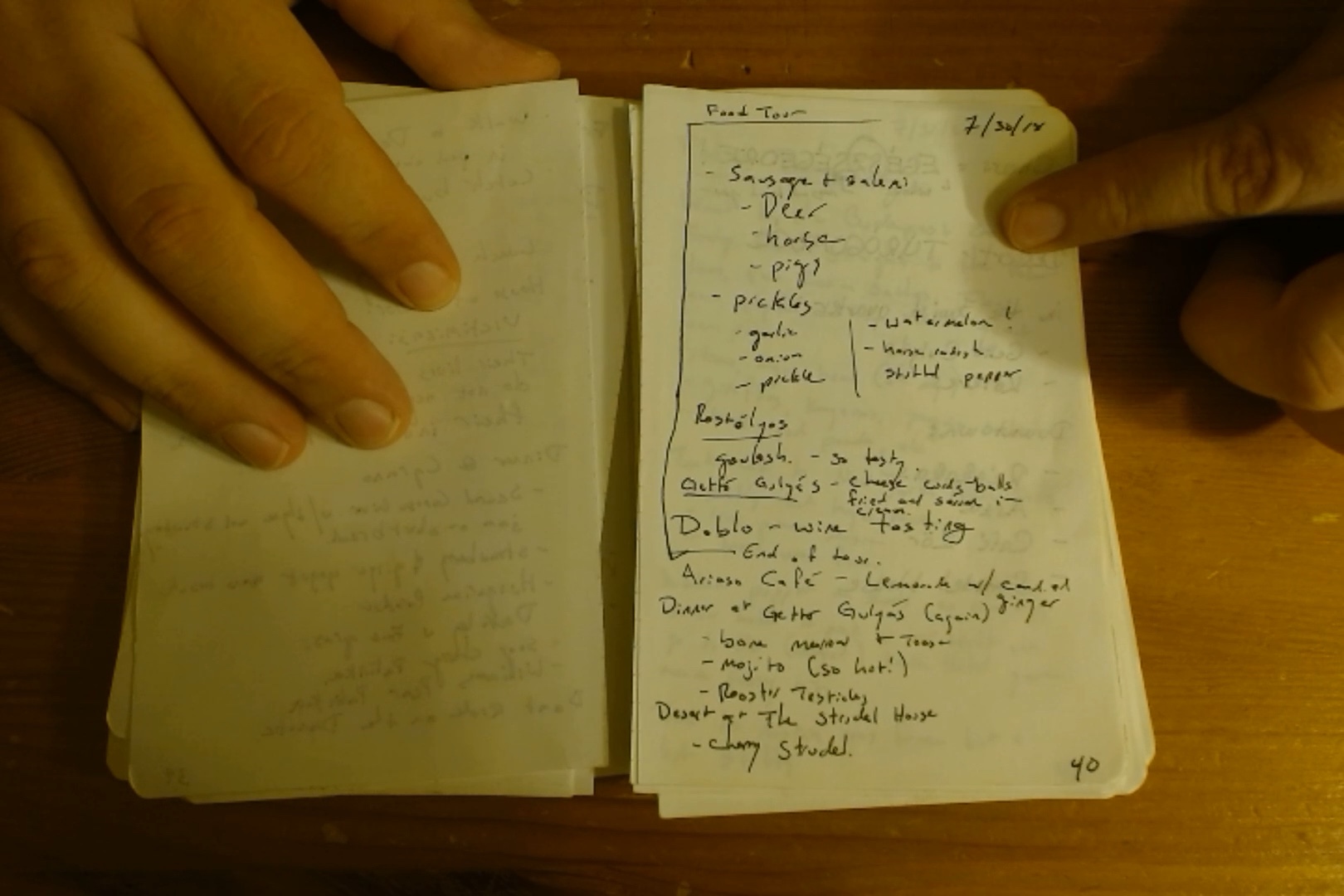
Our food tour covered salami and sausages—including deer, horse, and pig—plus pickles, goulash, cheese curds, wine, and lemonade with cardamom and ginger. The goulash was so tasty. The cheese was fried and served with sour cream; the wine tasting came with generous pours.

Dinner at Gettó Gulyás brought bone marrow, a mojito that was too hot, and rooster testicles. Then we went to Strudel House for cherry strudel.

Trip summary and all the daily posts

From the Notebook

Notebook page 40, 2018-07-30

Travel, Food comments edit

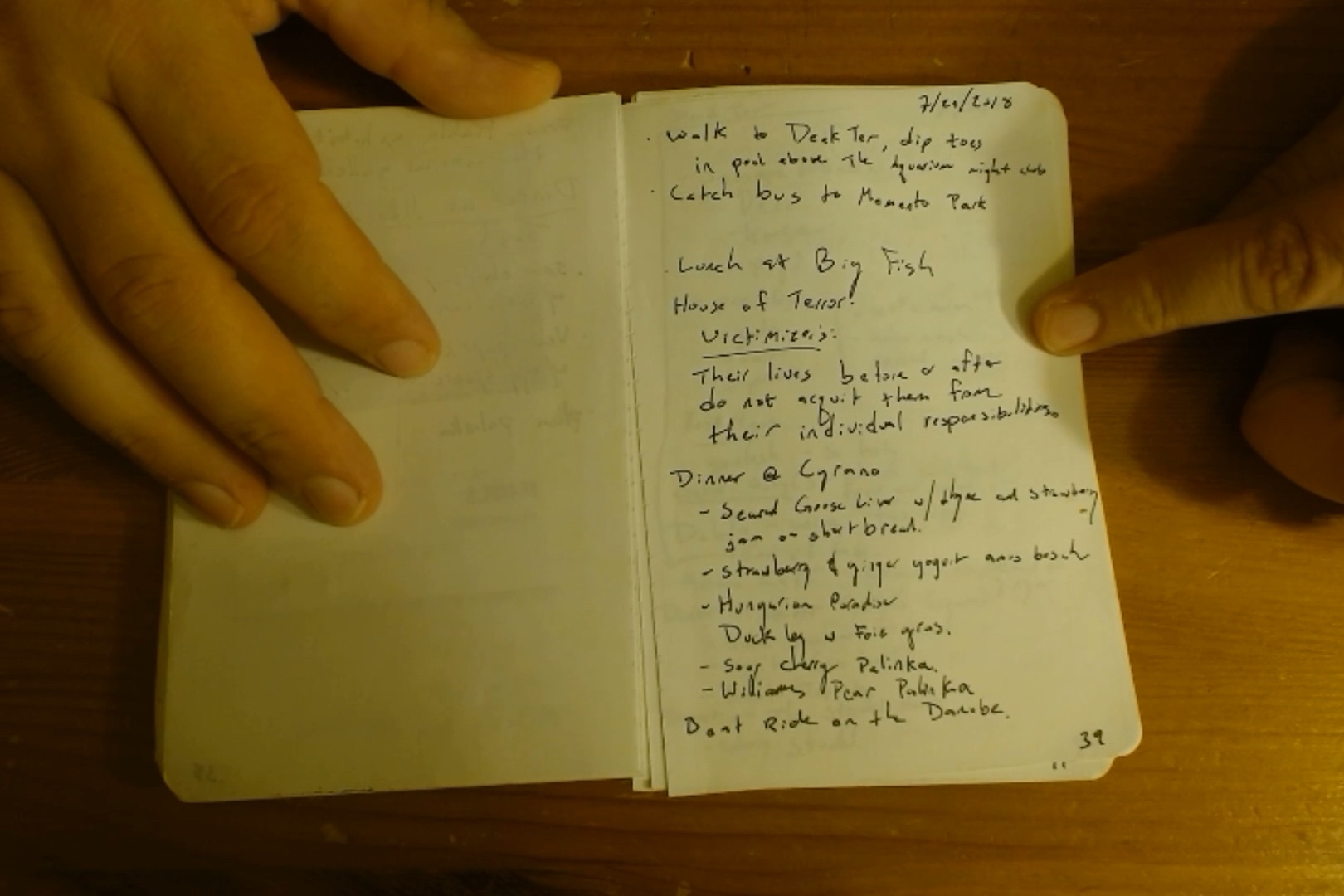
We walked to Deák tér and dipped our toes in the pool above the aquarium nightclub, then caught a bus to Memento Park. Lunch was at Bigfish, followed by the House of Terror.

Dinner at Cyrano started with goose liver, figs, strawberry jam, and shortbread. There was a strawberry and ginger yogurt amuse-bouche, duck leg with foie gras, sour cherry pálinka, and Williams pear pálinka. We ended the night with a boat ride on the Danube.

Trip summary and all the daily posts

From the Notebook

Notebook page 39, 2018-07-29

Travel, Food comments edit

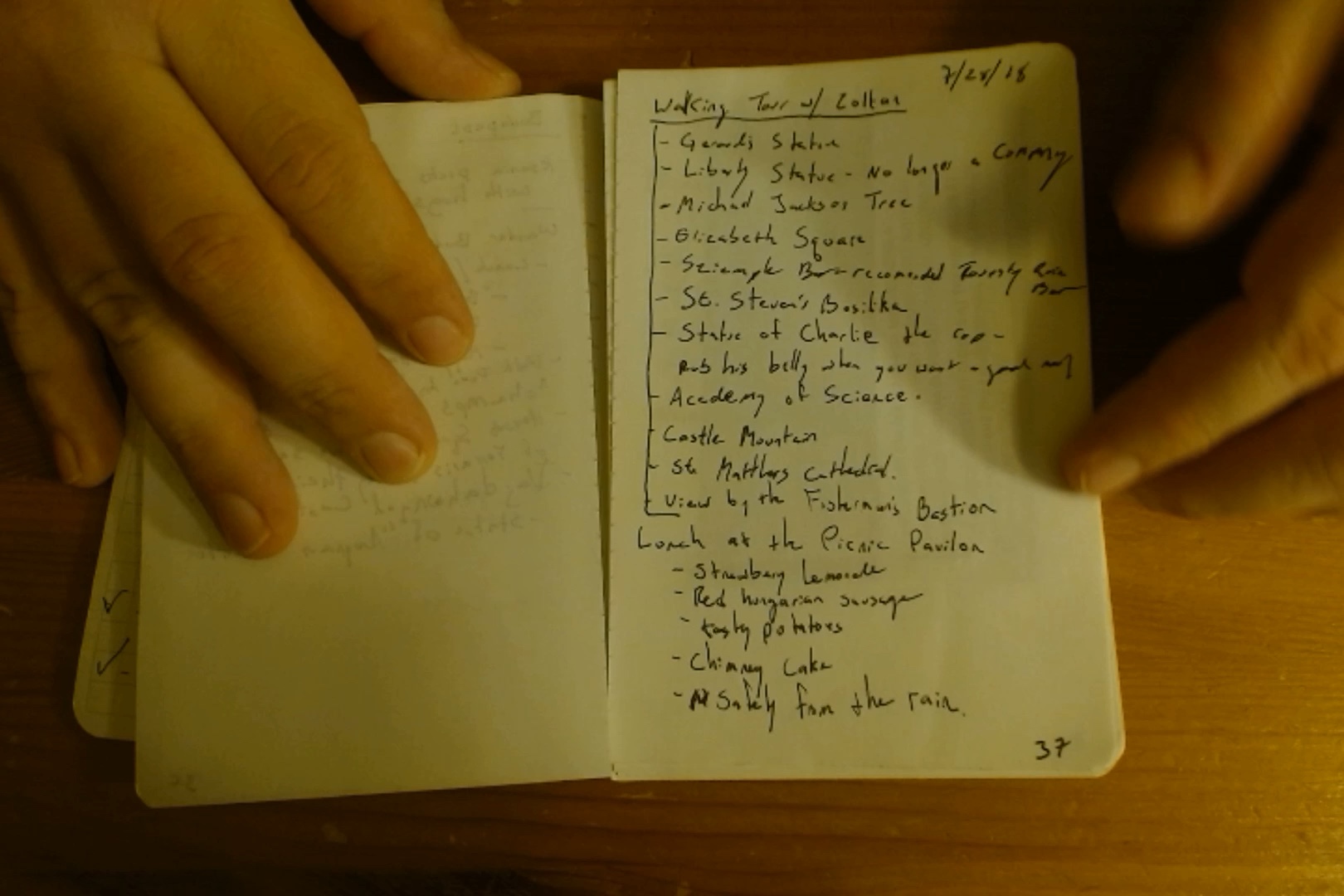
We took a walking tour through central Budapest: the Gandhi and Liberty statues, Michael Jackson’s tree, Elisabeth Square, St. Stephen’s Basilica, the Academy of Sciences, Castle Hill, Matthias Church, and Fisherman’s Bastion. The statue of Charlie the cow has polished bells, for reasons that became obvious as soon as people walked by.

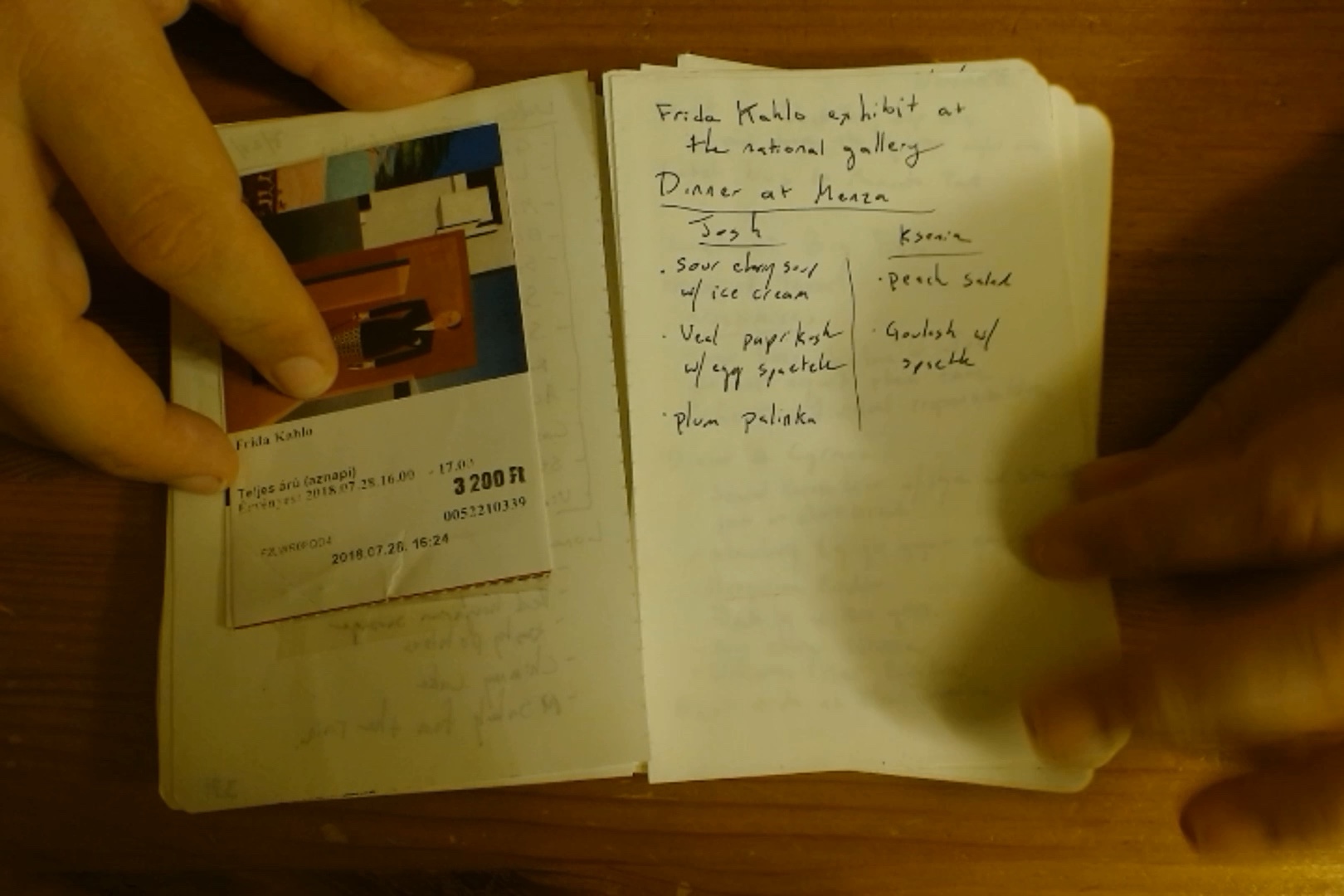
Lunch at the Picnic Pavilion was strawberry lemonade, red Hungarian sausage, tasty potatoes, and chimney cake. We got a little wet in the rain. Later, we saw the Frida Kahlo exhibition at the Hungarian National Gallery.

At Menza, I had sour cherry soup with ice cream, veal paprikash with egg spaetzle, and plum pálinka. Ksenia had a peach salad and goulash with spaetzle.

Trip summary and all the daily posts

From the Notebook

Notebook page 37, 2018-07-28 Notebook page 38, 2018-07-28

Travel, Food comments edit

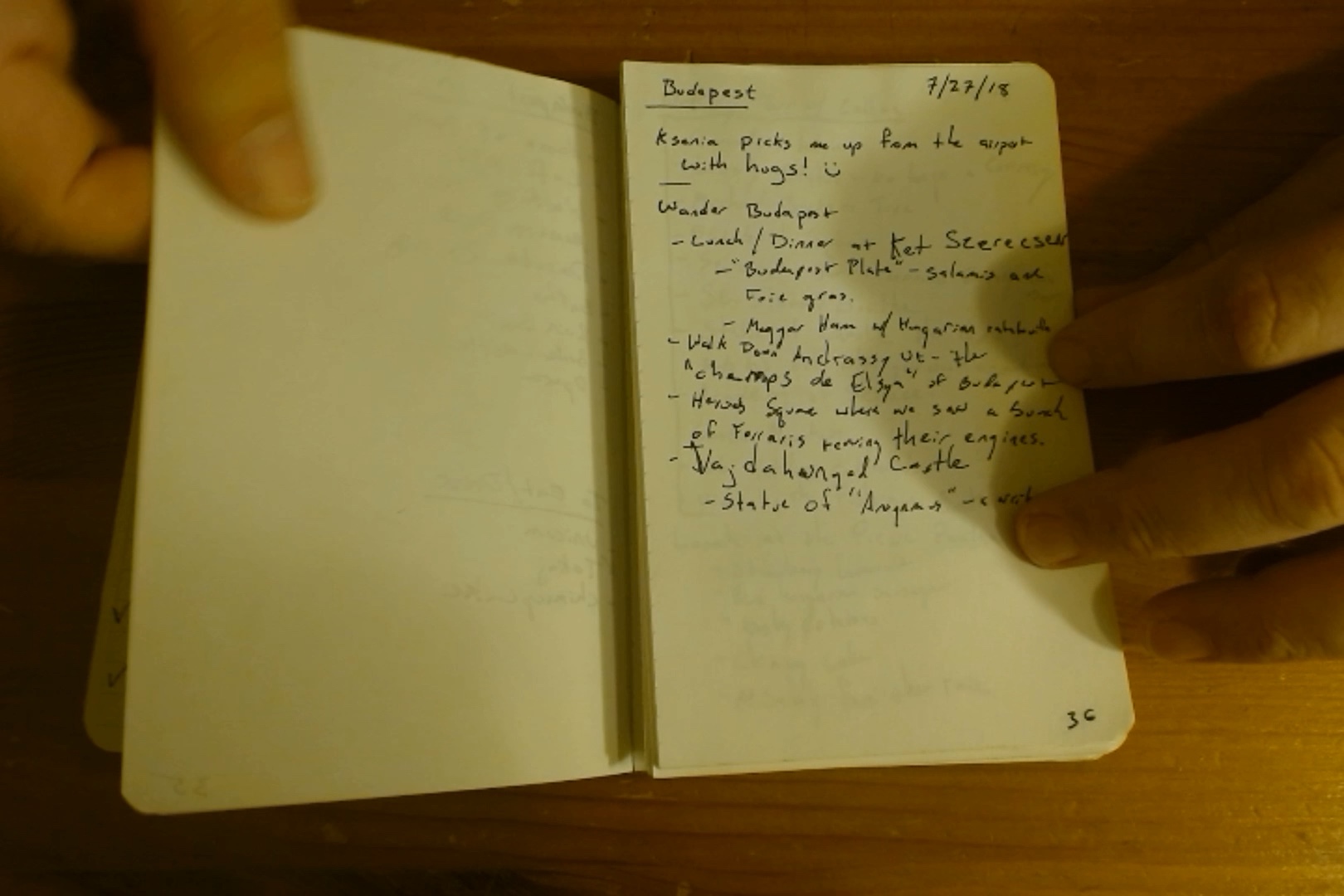
Ksenia picked me up from the airport with hugs. We wandered Budapest and had dinner at Két Szerecsen: a Budapest platter with salami and foie gras, and a Magyar Ham with Hungarian ratatouille.

Afterward we walked down Andrássy út, Budapest’s Champs-Élysées, and saw a bunch of Ferraris revving their engines in Heroes’ Square. We made it to Vajdahunyad Castle and the statue of Anonymous.

Trip summary and all the daily posts

From the Notebook

Notebook page 36, 2018-07-27

The out of the box console environment in Windows can leave a lot to be desired. It’s hard to resize, copy/paste doesn’t work out of the box, etc. ConEmu and Cmder wrap the existing cmd console (really it works with any console app) and fixes a lot of these issues. Some features (mostly stolen from the website)

  • Smooth window resizing
  • Tabs and splits (panes)
  • Easy run old DOS applications (games) in Windows 7 or 64bit OS (DosBox required)
  • Quake-style, normal, maximized and full screen window graphic modes
  • Better fonts
  • Using normal/bold/italic fonts for different parts of console simultaneously
  • Cursor: standard console (horizontal) or GUI (vertical)
  • Easily select various environments (PowerShell, cmd, admin consoles, etc)
  • Hot keys
  • Better mouse integration in the console

ConEmu and Cmder work in conjunction. ConEmu is the base application and Cmder adds additional configuration and settings. I’ve used them together for so long that I don’t really know which settings are from which program.

The rest of this post will assume you’re already using ConEmu and focus on how to set it up in a way that allows you to customize your console environment and keep it in sync across multiple computers. An added bonus of these requirements is that it makes it trivial to restore your environment when reinstalling Windows or getting a new computer.

Install Cmder and ConEmu

First up, installation. This is easy, just use chocolatey

choco install -y cmder.portable

Export Settings

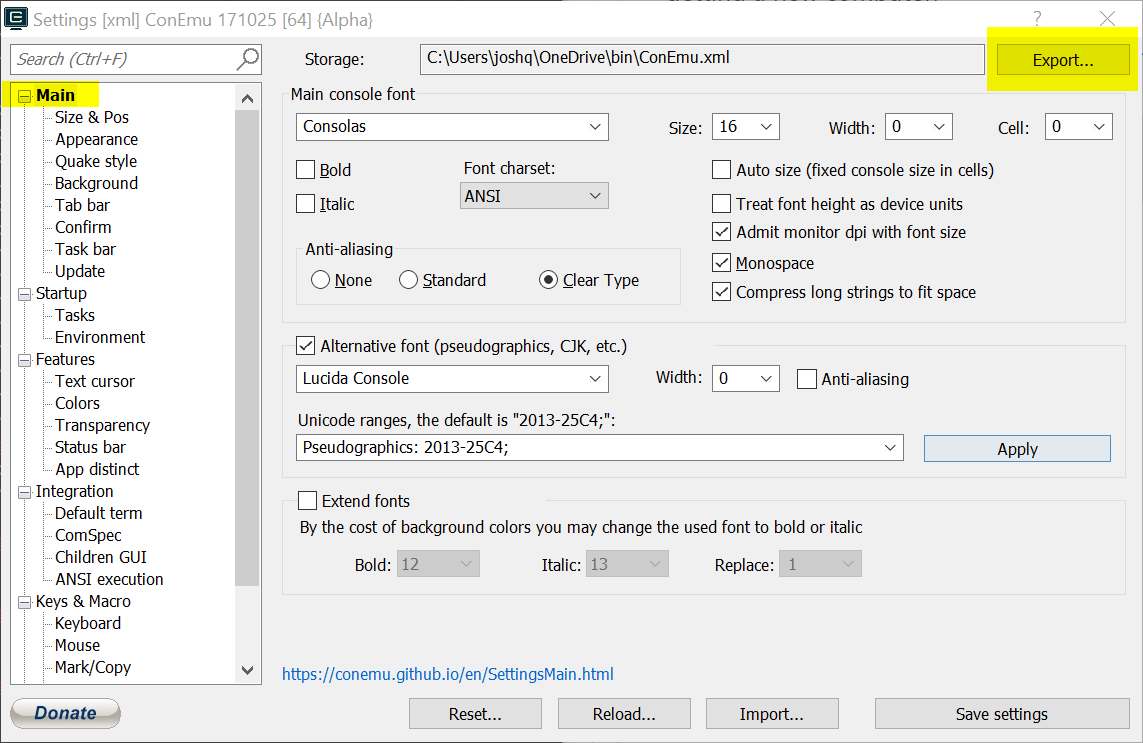
Well that was easy. Next we’ll start up Cmder and export the existing settings configuration. If you haven’t used the app yet, the defaults are still worth exporting since you need a starting point.

  1. Open up Cmder from the Windows Start Menu (this will start ConEmu)
  2. Open ConEmu’s settings window by using the hotkey Win-Alt-P or by clicking the hamburger menu on the bottom right corner.
  3. Click the Export button that shows up in the bottom right. Export Settings
  4. Save the file to a folder you sync across your computers (OneDrive, Dropbox, etc). I use c:\users\joshq\OneDrive\bin\ConEmu.xml

Use Exported Settings

Now that we have our configuration in a non standard location, we want to tell ConEmu to use it.

  1. Start up ConEmu from the Windows Start Menu
  2. Right click on it in the taskbar and select Pin to taskbar
  3. Close ConEmu to verify that the pin was created
  4. Next update the shortcut
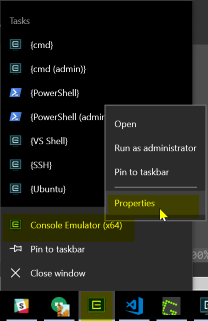
  5. Right click on the pin
  6. Right click on Console Emulator
  7. Click Properties

    Configure Pin Properties

  8. Change the target to include the -LoadCfgFile <Path To Exported Config> (using the config file we exported above)
     Files\ConEmu\ConEmu64.exe" -LoadCfgFile C:\Users\joshq\OneDrive\bin\ConEmu.xml
    
  9. Click OK
  10. Repeat this on every computer you want to use ConEmu

Now no matter what type of configuration change you make to ConEmu, your settings will follow you across all computers and to any new ones.

Configuring ConEmu

Speaking of configurations, what’s worth tweaking from the default install?

Tweak tab settings under Main/Tab Bar. If you’d prefer that ctrl-tabbing cycles between all tabs instead of just the most recent two, deselect Recent mode on the top right hand corner of the page. You can also change the what the tabs say by default by changing the Console: setting. I use ` %m->m %n %f. It indicates the current tab with an arrow (->`), and shows the currently running command and folder.

Under Startup, you can tell ConEmu remember your open tabs between sessions by selecting Auto save/restore opened tabs.

With Freatures\Transparency, you can configure different transparencies for your console when it is active and inactive. This can get pretty annoying if you make it to transparent, but it is a nice feature if used sparingly.

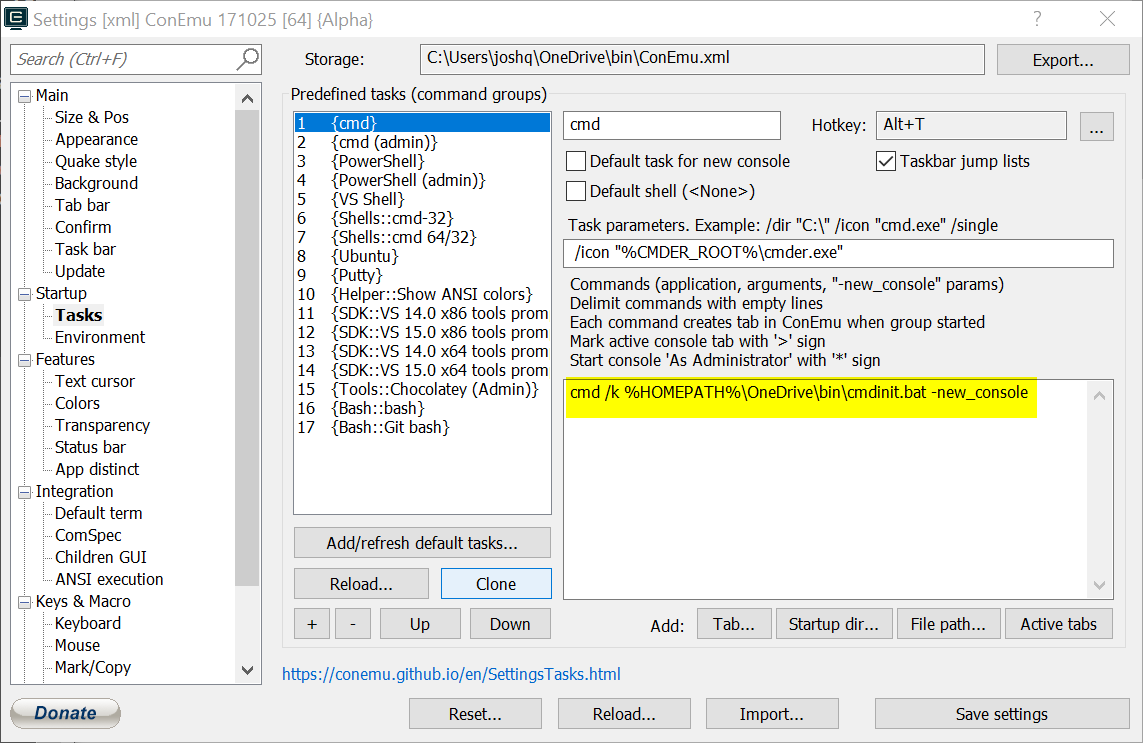
And most importantly, under Startup\Tasks you can configure which consoles are available when you press Ctrl-T. For me the minimum are cmd, an admin cmd, and a PowerShell prompt, but you can configure PuTTY, Ubuntu prompt using WSL, Visual Studio’s developer command prompt, or really any program that runs under a command prompt.

Tasks

Configuring cmd

The standard cmd.exe can be started with the /k argument to specify a .bat script to run at startup. This script can let you further customize your console environment. You can use it to set environment variables or aliases. It’s similar to a .bashrc in the Linux world.

To take advantage of this, edit the cmd task and set the command to run to be something like:

cmd /k %HOMEPATH%\OneDrive\bin\cmdinit.bat -new_console

We’re saving the script in the same OneDrive directory as our ConEmu configuration file. This way both will be sunk and the console environment will follow us from computer to computer.

This sample script does a few things:

  1. Adds a couple of additional folders to either the beginning or end of the current PATH
  2. Uses DOSKEY to configure some quick shortcuts to go from the command line to the File Explorer
  3. Uses DOSKEY to configure some aliases for frequent git commands. For instance, all we have to do now is type s to show the git status of the current directory, or co master to switch to the master branch.
  4. Uses DOSKEY to add a quick way to edit the configuration script (aliases) and another to reload the script if any changes have been made (refresh)
  5. Print out the current directory
@ECHO OFF
REM Console Startup Configuration
REM ******************************************

REM Setup PATH
REM ******************************************
SET PATH=%HomeDrive%%HomePath%\OneDrive\bin;%PATH%
SET PATH=C:\Program Files\Git\cmd\;%PATH%
SET PATH=%PATH%;C:\tools\sysinternals

REM Open the current directory in File Explorer
REM ******************************************
DOSKEY   ex=explorer $*
DOSKEY  ex.=explorer .

REM Git
REM ******************************************
DOSKEY push=git push
DOSKEY pull=git pull
DOSKEY   co=git checkout $*
DOSKEY    s=git status

REM Make it easy to edit this file
REM ******************************************
DOSKEY aliases=gvim %HomePath%\OneDrive\bin\cmdinit.bat ^& echo Don't forget to open run `refresh` to make sure these take effect
DOSKEY refresh=call %HomePath%\OneDrive\bin\cmdinit.bat

REM Print out current path when opening a new console
REM ******************************************
ECHO.
CD

There’s a lot more that can be done to with scripts like this to configure your environment. You can use the above script as a starting point and add anything you think of as you’re plugging away by running the aliases command. Any changes you make will automatically be saved and synced.

Despite being a developer that uses Windows, I spend a lot of time managing my code on the command line. As such I want to open up my code in Visual Studio from the command line. Typically I already know the name of the sln file, but if I don’t I can do a quick ls *.sln to find it and then type it in.

I’m lazy and that requires me to not only type more, but to also remember things. I’d much rather be able to cd to my project directory and then just type in the same thing no matter where I am and have it open up what I want. My first pass at automating this assumed that there was a single sln file in my current directory, figured out what it was and then opened it.

For the most part that works, but there are a couple of projects that have multiple sln files and/or sln files that don’t live in the root of the folder structure. In my case, there were few enough of these edge cases so I could just code around them.

Below is the batch file that I use. Each special case gets their own if/set.

@ECHO OFF
REM ***************************************************************************
REM SLN
REM ***************************************************************************
REM Find and open the prefered sln file If a prefered file can't be found, just
REM open the first one you see
REM ***************************************************************************

SET SLN=""

REM First off see if there is a fallback sln file to open
FOR /F %%i in ('dir /B/s *.sln') do (
  SET SLN=%%i
)

REM Now look if there is a preferred sln that we want to grab
IF  EXIST SecondSolutionInAFolder.sln (
  SET SLN=SecondSolutionInAFolder.sln
)

IF  EXIST .\ConsoleApps\FunWithSpikes\FunWithSpikes.sln (
  SET SLN=.\ConsoleApps\FunWithSpikes\FunWithSpikes.sln
)

IF NOT %SLN%=="" (
  ECHO Starting [93m%SLN%[0m
  START %SLN%
  GOTO:EOF
)

ECHO [91mCould not find a solution file to open.  [0m
ECHO Are you sure you are in the right directory?  [91m %CD% [0m

Installation and Usage

  1. Copy the script into a file named sln.bat somewhere in your path
  2. From the command line go to the root directory for your project
  3. Run the sln command
  4. If the wrong sln file is opened, edit your sln.bat and add another if/set
> cd c:\code\MySuperAwesomeProject
> sln
Starting .\MySuperAwesomeProject.sln

OSS, Licenses comments edit

What open source projects are OK to use in a comercially distributed product?

Good

Bad

Some licenses are explicitly not OK to use. For example, the copyleft licenses cannot be used in a closed source project. The following list is not exhaustive. Just because a license is not on the list does not automatically mean that it safe to use.

Dual Licenses

It is possible for a project to have more than one license specified. Unless specified otherwise in their licensing, all clauses from all licenses apply. This means that, to be safe, each license needs to be on the approved list.

Other Licenses

Any other license must be evaluated on a case by case basis.

More Information

The Open Source Initiative has lots of useful information about OSS licensing. Choose A License does a great job of breaking down the most common licenses comparing the differences between them.

Shakespeare comments edit

When I’m reading a Shakespear play for the first time in preperation to go to the theater I like to do a couple of things. First off, I read and reread it several times. This helps me get past the stage of just understanding what is happening (sometimes a little difficult given the language). After the second or third read through, I’m no longer just focusing on plot, but I can start to enjoy the themes and characters a lot more.

Next, I try to summarize what happens in each act and scene. In order. From memory. Again, this helps me focus on the themes, but more importantly (to me at least) it helps me remember the structure of the text when I’m in the theater. This means, I can spot the changes the production chose to make. Sure, most productions will drop all of the horse jokes because who in modern times is going to understand the joke about the old palfrey? I’m sure it went over great in the 16th century, but it doen’t really land in the 21st. But what about the other minor changes? What impact do they have on the production? Were they cut for time? Clarity? Because they conflict with the themes the production is trying to present?

Anyway, so I’m a nerd and I take too many notes when I’m ostensibly reading for pleasure. Here are my notes from my most recent reread of King Lear.

Characters

Principle players

  • Lear
    • King
  • Kent
    • Lear’s faithful servant
    • Exiled
  • Daughters
    • Goneril & Albany
    • Regan & Cornwall
    • Cordelia - The good one
  • Glouchester, Duke of
  • Edmund
    • Glouchester’s bastard
  • Edgar
    • Glouchester’s legit son
  • Fool
    • A fool

Plot Summary

Act 1

In which Lear fails to plan for his retirement.

Act 1 Scene 1

Lear decides to retire and splits up his kingdom amongst his daughters based on how much they love him. Turns out Goneril and Regan are good at professing their love. Cordelia on the other hand is more plain spoken. She gets the shaft. Kent gets exiled. France marries Cordelia.

Act 1 Scene 2

Edmund starts to make his dad think that Edgar is out to kill him for his inheritance. Bastards gotta bastard.

Act 1 Scene 3

Goneril ain’t enjoying having her dad live with her.

Act 1 Scene 4

Lear starts to chafe at living with his daughter. Kent comes back all disguised and ingratiates himself back in with Lear. Fools gotta fool.

Act 1 Scene 5

Lear heads off to his other daughter’s place with the Fool. Kent goes ahead as a messenger.

Act 2

In which Lear realizes that he should have planned for his retirement.

Act 2 Scene 1

Edmund scares Edgar into thinking that Glouchester has it out for him. Fakes a fight with Edgar and Edgar flees. Glouchester sees this as proof that Edgar was plotting against him and disowns his son. Regan and Cornwall arrive and support Glouchester in this decision.

Act 2 Scene 2

Kent arrives at Glouchester’s at the same time as Goneril’s messenger and gets sassy with him. Maybe a little too sassy since Cornwall has him put in the stocks.

Act 2 Scene 3

Edgar is evading pursuit. Decides to dress up as a crazy beggar (Tom o’ Bedlam) and go on the lam.

Act 2 Scene 4

Lear arrives to find his servant in the stocks and gets pissy about it. Regan don’t care. Goneril arrives and double teams Lear with her sister. They say as long as he is living under their roofs he has to give up his retinue of 100 knights. Whittling it down to 50, then 25, then none. Lear says F this and runs out into the storm.

Act 3

In which Lear argues with the wind, which I’m guessing is the medieval equivalent of yelling at the T.V.

Act 3 Scene 1

Kent, looking for Lear, bumps into a “Gentleman” from Lear’s retinue. Tells him that all is not lost and that France is coming with Cordelia. Scene ends with them going in separate directions in search of Lear.

Act 3 Scene 2

Lear wanders around in the storm yelling at it and wallowing in self pity. The Fool tries to cheer him up to no use.

Act 3 Scene 3

Glouchester frets over Lear being out in the storm. Tells Edmund that he’s going to help his erstwhile king. Edgar’s all like “cool. cool cool cool.” and then tells the audience that he’s totally going to rat out his dad so that Cornwall will like him.

Act 3 Scene 4

Kent finds Lear and convinces him to seek shelter. They stumble across a shack with Edmund in it who is pretending to be crazy. Glouchester finds them and invites them all back to his pad for safety.

Act 3 Scene 5

Edgar rats out his dad to Cornwall. Cornwall calls for his head.

Act 3 Scene 6

Lear has a delirious fever dream of a trial for Goneril and Regan. Imaginary Regan is imagined to run away and is then chased by imaginary dogs. Glouchester comes back and tells Kent to take Lear to Dover.

Act 3 Scene 7

Cornwall sends Goneril and Edgar back to Goneril’s castle, plucks out Glouchester’s eyes, and is stabbed. It’s just a flesh wound.

Act 4

In which reunions are made and more are hinted at.

Act 4 Scene 1

Blinded, Glouchester has been kicked out of his own castle and is brought to Edgar. Edgar agrees to take him to Dover.

Act 4 Scene 2

Goneril and Edmund arrive at Goneril’s castle. Albany (her hubby) isn’t happy about all the king-gas-lighting and eye-plucking. Goneril totes has the hots for Edmund. Cornwall dies off stage.

Act 4 Scene 3

Lear has arrived at Dover. Cordy reads a letter about how her sisters treated their dad. It made her sorrowful, but at least she’s pretty when she’s sad. Lear is to ashamed to see his daughter.

Act 4 Scene 4

A doctor tells Cordelia that there is hope for treating her dad. She sends out people in search of him.

Act 4 Scene 5

Regan talks with Goneril’s messenger. She’s concerned that Goneril might be intersted in Edmund and tries to get this information from Oswald (the messenger). She reveals that she thinks she is a better match for the new Duke of Glouchester.

Act 4 Scene 6

The cliff diving scene. Edgar (as Poor Tom) has led his father to “the edge” of the Cliffs of Dover. In fact they are nowhere near the cliffs. Edgar in the hopes of helping his father get over his suicidal depressoin encourages his father to jump. Glouchester jumps and doean’t get hurt since they are pretty much on solid ground. Edgar now pretends to be someone else and talks about how far Glouchester had fallen. Glouchester accepts this as a miracle and resolves to live his life out.

Lear stumbles in around now and starts to pontificate on morality. He’s chased off when Cordelia’s messengers find him and try to bring him back t his daughter.

Oswald next stumbles into the scene and declares his intent to kill Glouchester. Edgar, being the good son, takes issue with this and defends his father, killing Oswald. After searching the body, he finds Goneril’s note to Edgar plotting the death of Albany (Goney’s hubby).

Act 4 Scene 7

Lear has been caught and brought back to Cordy.

Act 5

In which everyone lives happilly ever after, except for the vast majority who die in the last scene.

Act 5 Scene 1

Prelude to war. Albany shows up and joins with Regan. Edmund later contimplates killing Albany.

Edgar gives Albany the letter from Goneril trying to plot his assination with Edmund.

Edmund think about which sister he wants to marry.

Act 5 Scene 2

The war has been lost. Edgar tries to reassure Glouchester who is ready to die. Which is good cuz he dies off stage between scenes.

No further, sir. A man may rot even here.

– Glouchester Line 9

Act 5 Scene 3

Edmund sends Lear and Cordelia to prison followed with orders to have them killed. Lear goes gladly. He looks forward to spending the rest of his days with Cordelia and cares not for prison.

Albany, Goneril, and Regan enter and start arguing over Edmund’s station. Goneril reveals that she’s poisoned Regan. Albany summons Edgar (no longr dressed as a commoner) who accuses Edmund of being a traitor and fights him in single combat. Edmund is mortally wounded but takes his sweet ass time to die.

Albany promises to give everything to Cordelia and Lear. Enter Lear with Cordy’s dead body. Lear dies of grief. Kent arrives to say that he’s not long for this world.

Who Dies:

  1. Glouchester (off stage)
  2. Regan (poisoned, dies off stage)
  3. Edmund (wounded in single combat, dies slowly on stage)
  4. Cordelia (hanged off stage)
  5. Lear
  6. Kent (implied to off stage soon after the completion of the play)

Resources

Notes from my March 6 - 11 2017 trip to Barcelona with Ksenia.

General Notes

We didn’t use the transit system. Either stuff was within walking distance or we took cabs. Barcelona has it’s own cab app (works like Uber), so you can hail one that way if you wish. The app is called Helo. I found the app through Google maps. Input the address in Google Maps you want to get to, and then click on “Hail a Cab” and app suggestions will pop up.

We like using our credit cards when we travel abroad (we have one that has no foreign transactions fees), and Barcelona was very credit-card friendly (unlike Germany….ugh that’s a whole other story). Also, I find that more and more places ask (when charging stuff to your CC) if you want to pay in Euros or US dollars. Definitely pay with Euros. The price difference may be small, but it starts to add up if you keep using your CC.

Eat

Ham. There are several types but what you want to eat will be the black hoof iberico. Sweat, salty, tender, melt in your mouth. Amazing.

There’s more foie here than I would have expected. We wound up eating foie and ham each and every day. It was delightful.

Tapas tend to be very regional dishes in Spain. Which means that you can only find a handful of different options wherever you go. Except Barcelona. Barcelona never had the tapas tradition, so when they started becoming a thing Barcelona just made everyone else’s and then invented some new ones. This means that if you want to try all the tapas, Barcelona is where you want to be. I enjoyed eating tapas at the bar. It’s nice to have the bartender around so you can easily and quickly order another dish. And you will be ordering another dish.

Pan con tomate or tomato bread is a common dish where they rub a mushy tomato on some crispy (sometimes purposefully stale) bread and drizzle some olive oil over it. It is delicious and you can find it everywhere. If a spot doesn’t have good tomato bread then it’s probably not worth eating anything else there.

Reservations aren’t required but can be helpful.

  • Tapas @ Catalana
    • Good not great.
  • La Pepta
    • We went to eat here twice! Ksenia still talks about the foie gras topped with white chocolate and hazelnut shavings. They do giant gintonics.
    • In can get VERY crowded in there so if you get there RIGHT at 7:30pm (when they re-open for dinner), you should be able to get a seat at the bar.
  • Walking Food Tour of Gracia
    • Gracia is a neighborhood with a unique identity and great food. This tour was one of our highlights of the trip! Highly recommend! It just so happened that on our tour it was me, Ksenia, and one other person, plus the guide. Gracia is delightful! Also, if you like getting one-of-a-kind clothing, this is the place to walk around! K got several shirts for herself and mom here. In one shop, the owner/designer had her studio right behind her, with all the materials she needed to make the shirts.
    • Stops:
      • Con Tosca - a cute cafe where we had sausage on tomato bread and a glass of cava.
      • Local market
        • I Conservas Gloria for olives
        • Fabregas for ham
        • La Trobada del Gourmet for cheese and jams
      • Oil Sal a salt and oil store where we had olive oil tasting
      • l’Anxoveta a cute bar, we had tomato bread and crouqets
      • Pastisseria Principe a Syrian pastry shop that’s been there for 30 years
      • Bodega Ca’l Pep an ancient very local bar. We had vermouth, pickled anchioves, and sausage.
      • La botigueta del Bon Menjar a small shop that sells premade food. very local
      • Pastissera Ideal another pastry shop. We had cremat - a Spanish version of creme brulee (it actually predates the French version)
  • La Pubilla
    • My favorite restaurant. I’d recommend a reservation, or just getting there when they open.
    • We ate here twice. When we came back the second time we were welcomed like old friends.
    • Between K and I, we ate like 90% of the menu between the two trips there. And we were not disappointed.
    • The waiter was gave us some great wine recommendations, they have some really local stuff there. Like 1km away local.
    • Best croquets we had
    • Homemade pate
    • The capacio was one of the best things I ate on this trip.
  • Alta Taberna Paco Meralgo
  • Tapeo del Born
    • Near the Picasso Museum. We ate here on our last night, at the bar.
    • It feels a bit more touristy but the food was still good. K liked it more than I did.
    • When we ordered our food, one of the guys behind the bar asked if we had come there before because he was impressed with our choices.
    • The Foie Gras burger was good.
  • Mercado de la Boqueria
    • Not a restaurant, but it has plenty of stalls in it where you can get all sorts of food
    • Butchers sell “meat cones” - charcuterie in a paper cone.
    • Fresh juices
    • Hot food
    • Candies
    • etc.

Drink

Gintonic has recently become a thing in Spain. According to a bartender I spoke with Hendrix put a lot of ad dollars into the area and it worked. There are dedicated gin bars with dozens if not hundereds of bottles to choose from. Josh loved these places. A lot.

While gin is the new fad, vermouth is the traditional drink. The early afternoon is called “the vermouth hour”. It’s when you’re supposed to get together with some friends and have a glass of vermouth, a few sardines, and chat.

Another classic is cava, a Spanish sparkling white wine.

  • Elephanta
    • A gintonic bar that also has a great tea list.
    • Several dozen options for gin, with useful descriptions.
    • The menus are on the back of LPs.
    • They do flights
  • Bobby’s Gin
    • Hundreds of bottles of gin
    • Very knowledgeable bartenders
    • Lots of obscure and local gins
    • No food

Do

Barcelona is the city of Gaudi.

  • Gaudi
    • Sagrada Familia
      • Definitely worth booking a ticket with a tour, the “guided experience”, as the tour guide will point out elements to you that you will have missed on your own. Tickets
      • Definitely purchase online! You can choose which time you want to go in.
      • Entrance will be on the “old” side, not the Cubist side.
      • We went in the afternoon and the lighting through the orange/red stained glass windows was AMAZING inside because the sun was setting.
      • This was by far my favorite part of Barcelona that I couldn’t eat or drink.
    • Casa Batlló
      • This house is AMAZING! Don’t miss it!
      • The audioguide is worth it. There are so many details.
      • The interior was really cool with all sorts of curved walls and doors. It felt like being in an underwater fairytale.
    • Park Guell (aka Gaudi Park)
      • So the park is free BUT if you want to go visit the section of the park with all the Gaudi stuff you have to buy a ticket and it’s timed entrances. We didn’t realize this when we went (this is a very recent thing, as the entire thing used to be free) We got there at like 3, got our ticket for 4:30, and in between that time we walked around through the rest of the park which has several layers. It is a nice walk and you have some great views. The Gaudi section will be crowded. So if you’d like, plan in advance and get tickets online for a timed entry. FYI: the entire park is up on a hill! We went to the Park after we did the food tour, because it was essentially a straight shot from the endpoint of the tour (and because stuff was closed at 2pm-ish).
    • Palau Guell
      • My least favorite of the Gaudi sites, perhaps because it was the last.
      • The roof has amazing views but is very sloped. It may not bother some people but I was terrorfied up there. Frozen and refused to move without holding on to something.
  • Free Walking Tour
    • We did three of these in Germany and one in Barcelona. Really great way for you to quickly learn the lay of the land, the history, and some great anecdotes.
  • Picasso Museum
    • I’m a huge fan and this museum is in a very nice building too! Also some good shopping in the area too!
  • La Rambla
    • Very touristy so keep an eye out for pick pockets.
    • Crowded
    • Only worth it as a way to get to Mercado de la Boqueria
  • Papirum
    • Paper store that sells hand, bound deckled, leather notebooks.
  • Museu d’Art Contemporani de Barcelona
    • Very modern very out there. We did not enjoy this museum. It’s the type of modern art that people sneer at when they think of modern art. Like a banquet table that is set with plates of rice died to look like the flags of various nations, but then they left all the food to rot. Or a wall made out of loaves of white bread.

Sleep

Hotel Praktik Bakery is a hotel with a bakery on the first floor. Sounds a bit gimmicky except that they legitimately have the best bread in the city. There are lines out the door of locals and tourists. You can see the bakers making the bread in the front window. The pastries are amazing, and the grab and go sandwich I got for breakfast was legitimately one of the best sandwiches I ever had.

They do a continental style breakfast, but it’s better to just get something from the bakery directly.

If a bakery doesn’t tickle your fancy, Praktik has other themed hotels in Barcelona, including a wine bar slash hotel.

Oh, and the rooms have rain showers.

All of that, plus a great location.

Chrome, Tips, GitHub, PR comments edit

Sometimes when I’m working on a long pull request in GitHub and switch back to the PR tab after a while of looking at other pages the Pull Request page will automcaticall reload itself. Most of the time this is fine, but sometimes I wind up losing a lot of state (scroll position, which files were loaded manually, which files had been collapsed, etc). It turns out that Chrome will garbage collect tabs that are taking up a lot of memory that you may not be using. Chrome allows you to disable this behavior by going to chrome://flags/#automatic-tab-discarding. Simply set the drop down to ‘Disabled’.

I typically don’t want to keep this setting once I’m done with my PR, so I’ll then jump into slack and ask it to /remind me to fix chrome://flags/#automatic-tab-discarding in the morning

GitHub Pages, SSL comments edit

Adding a certificate to your GitHub Pages site so that all of your traffic can use HTTPS is easy… if you don’t use a custom domain name. If you do have a custom domain, then you need to do a little work and a (free) Cloud Flare account to get it going.

  1. Create your free acount on https://www.cloudflare.com
  2. Enter your site’s address in the setup bar
  3. Head over to your DNS provider and add the Clod Flare servers as your custom domain servers. e.g. On NameCheap
  4. Optionally, you can head back to Cloud Flare and set up a page rule to redirect all HTTP pages to redirect to HTTPS. Just add a rule to match http://*quintussential.com/*
  5. Wait. DNS has to happen now.

Thanks to Hacker Noon for pointing this out.

Mermaid, Tools comments edit

Mermaid is a tool that will generate diagrams from a basic definition language.

The mermaid website has full description of the language and features: https://knsv.github.io/mermaid/#syntax

A Simple Example

The following snippet will create a simple sequence diagram.

sequenceDiagram
    Alice->>John: Hello John, how are you?
    John-->>Alice: Great!

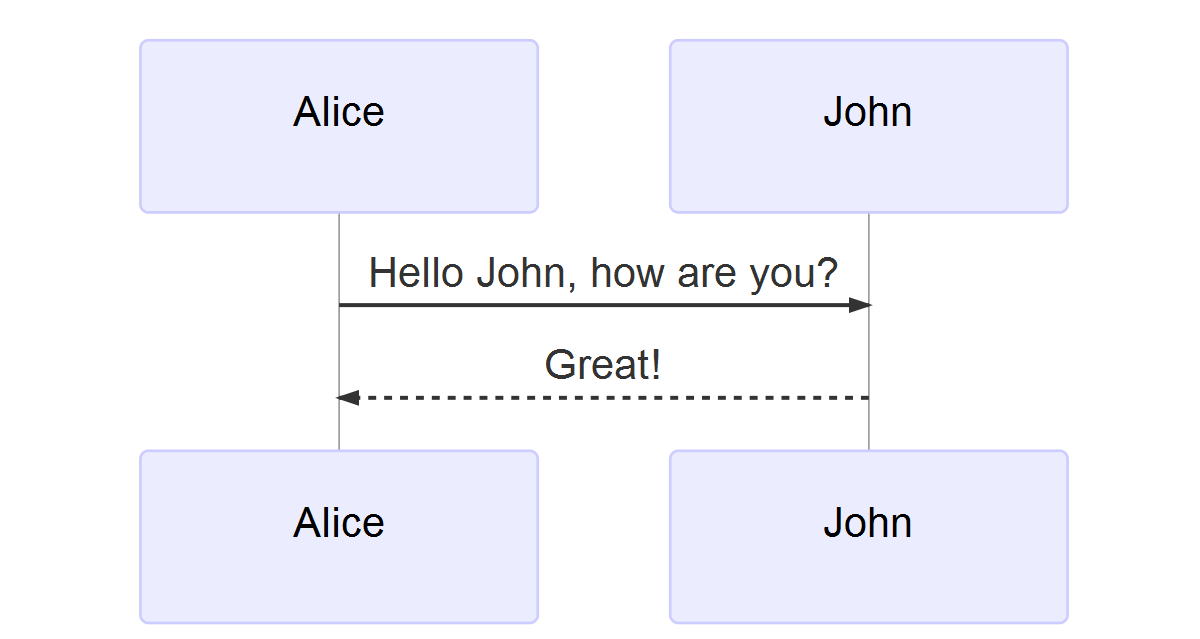
The above diagram renders as:

sequenceDiagram Alice->>John: Hello John, how are you? John-->>Alice: Great!

Tools

There are various tools that you can use to edit and save diagrams as images

Mermaid CLI

Pros and Cons

Pros

  • Export diagram as an image

Cons

  • No live updating diagram as you type
  • Syntax requires a non-standard but simple header of ```mermaid

Setup and Use

  1. Install node.js
  2. Install the mermaid npm package
     npm install -g mermaid
    
  3. Install the phantomjs npm package
     npm install -g phantomjs
    
  4. Save the following diagram definition to a file sequence.mmd
     sequenceDiagram
         Alice->>John: Hello John, how are you?
         John-->>Alice: Great!
    
  5. Run mermaid command
     mermaid sequence.mmd
    
  6. Open the image found at sequence.mmd.png

sequence.mmd.png

Visual Studio Code

Pros and Cons

Pros

  • Live updating diagram as you type

Cons

  • No easy way to export diagram as an image
  • Syntax requires a non-standard but simple header of ```mermaid
  • Supports the activate/deactivate keywords that are unsupported by other processors

Setup and Use

  1. Download and install Visual Studio Code (this is entirely different than the “normal” Visual Studio you use to write C# code)
  2. In Visual Studio Code download and install the Mermaid Preview extension
  3. Restart Visual Studio Code when prompted
  4. Create a new markdown file named sequence.md
  5. Paste in the following diagram definition (including the lines that start with three backticks)
         ```mermaid
         sequenceDiagram
             Alice->>John: Hello John, how are you?
             John-->>Alice: Great!
         ```
    
  6. Press <control-p> to bring up the Visual Studio Code command window
  7. Type in > Preview Mermaid Diagram
    • Include the > character
    • You only need to type enough of the command that it shows up in the menu
    • You can type in various short cuts that will also bring up the command quickly
      • > Mermaid
      • > PMD (just the initials)
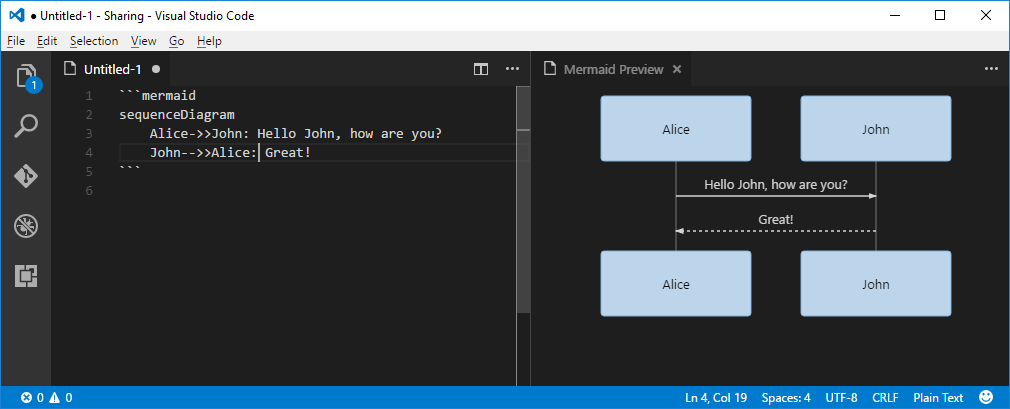
  8. Click on any of the text in the left pane that is part of the diagram definition

Sample Diagram in Visual Studio

Atom

Pros and Cons

Pros

  • Live updating diagram as you type
  • Export diagram to PNG or SVG

Cons

  • Exported diagram has a blank background (you need to manually open the file and add a non-transparent background to be able to view the image)

Setup and Use

  1. Install Atom editor
  2. Install Mermaid Preview extension
  3. Create a new markdown file named sequence.mmd
  4. Paste in the following diagram definition
     sequenceDiagram
         Alice->>John: Hello John, how are you?
         John-->>Alice: Great!
    
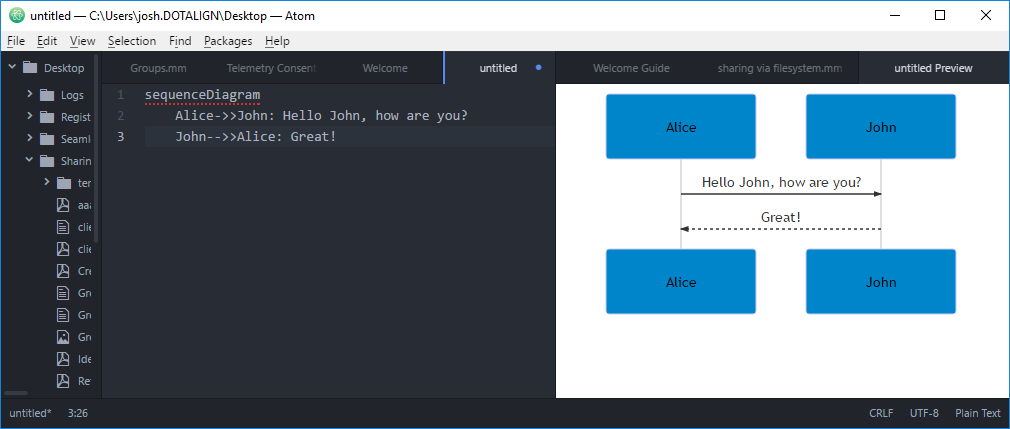
  5. Press the Packages -> Mermaid Preview -> Toggle Preview button
  6. To export as image right click the diagram and select Save as PNG

Sample Diagram in Atom

Docker, Jekyll comments edit

GitHub Pages have some great features that I’m excited about. Markdown makes writing code-centric blog posts easy. Storing posts in git is great – history, diffs, and no need to learn a new tool. Not to mention simple hosting by GitHub.

There’s just one minor issue, setting up a decent environment on a Windows machine can be troublesome if you’re not alread a Ruby developer. I’ve tried twice now and run into issues both times. Multiple versions of Ruby, non-Windows friendly libraries, failed SSL certs, and probably a few more things that I’ve forgotten. Next I thought I’d try it on Linux on Windows. For the most part that worked well, except some auto-reload features didn’t work well.

It’s almost as if I would be better off trying to run the environment on a Linux machine. Seeing as I don’t have a spare machine and hate running VMs on my work laptop, I’m probably not running Linux any time soon.

All I really want is a preconfigured environment that I can download quickly and not have to do anything to setup. Is that too much to ask? Apparently not. Heading over to Docker Hub, I found several Docker Images for exactly the environment I wanted. I blindly went with the one with the most downloads. There was one minor hicup. The instuctions use the Linux variable $PWD to mount the volume from the host machine to the Docker image. That just needed to be translated to %CD%. With that down, I was able to point the browser on my Windows machine to localhost:4040/ and my website was up. I could edit any file with whatever Windows tool I was comfortable with (ironically, Vim), save it and my site would be regenerated.

All told, I was up and running in about 15 minutes, including download time and writing two simple batch files to start and stop the containers.

StartDocker.bat

@ECHO off
ECHO Starting gpages container

docker run -t --rm           ^
    --name gpages            ^
    -v "%CD%":/usr/src/app   ^
    -p 4000:4000             ^
    starefossen/github-pages

StopDocker.bat

@ECHO off
ECHO Stopping gpages container
docker stop gpages

Travel, Food comments edit

The Trip

July 22–August 5, 2017. Fifteen days, four cities: Kraków, Gdańsk, Warsaw, and Wrocław, with side trips to Auschwitz-Birkenau, Wieliczka, and Książ Castle. Ksenia greeted me at the airport with flowers and hugs. We ended with too much bread and one last walk around Wrocław.

Where We Ate and Drank

Kraków

Place Rating What I thought
King’s Restaurant — Beef tartare, foie gras, duck, wild boar, and mushroom ice cream on our first night.
Pod Nosem — Beef tartare and duck with foie gras for me; more foie gras and strawberries for Ksenia.
Jama Michalika — Tea at the old home of the Green Balloon cabaret.
The Black Duck — Salmon tartare and Old Polish duck with red cabbage.
Szara Gęś (the Grey Goose) — Foie gras ice cream and roast goose before our flight.

We also had pierogi, duck pierogi, Polish crêpes, and blueberries between the named stops.

Gdańsk

Place Rating What I thought
Gvara ★★★☆☆ 3/5 The goose liver with apple sauce wasn’t for me, but the ham hocks were tasty and tender. Ksenia liked her cold borscht and potato pancakes.
Pod Łososiem ★★☆☆☆ 2/5 Dinner was okay and the place seemed past its prime. The cherry flambé dessert was good.
Craft Cocktails — Slow Fader and a gin cocktail; the latter took too long and got warm.
NaLeśnikowa — Local crêpes for breakfast.
Lodziarnia Miś — “Famous” lemon ice cream, though the flavor I wanted had sold out.
Bar Turystyczny ★★★★★ 5/5 Simple, well-executed pork cutlets. Dinner for both of us cost 32 złoty.

We also stopped for a John Collins, snacks, and tea after watching the candy makers at Ciuciu.

Warsaw

Place Rating What I thought
Czerwony Wieprz — I ate from the “Dignitaries” menu; Ksenia ate from the “Proletariat” menu.
Croque Madame — Better-than-average lemonade.
Być Może — Fried eggs, bacon, and pancakes for me; scrambled eggs for Ksenia.

There was also a zapiekanka, pierogi, ice cream, and dinner with friends.

Wrocław

Place Rating What I thought
Dwór Polski ★★☆☆☆ 2/5 Roast stag and duck with cherries. So-so.
Graciarnia ★★★★☆ 4/5 Sobótka was clean, crisp, a little bitter, and an excellent summer beer.
Café Vincent — Breakfast came with so much bread that we ordered too much.
Karczma Lwowska — Delicious kielbasa and potatoes on our first visit; odd but surprisingly good marinated pears on our second.

I also had an open-faced roast-beef-and-fried-egg sandwich for breakfast before touring the university.

Where We Stayed

We also stayed in Gdańsk and Wrocław.

Places and Days Worth Remembering

The Auschwitz-Birkenau Memorial was a difficult, necessary day. Kraków also gave us Wawel, the Wieliczka Salt Mine, St. Mary’s Basilica, and a Jewish Quarter tour. In Gdańsk we visited the European Solidarity Centre and the Museum of the Second World War. Warsaw gave us the Warsaw Rising Museum, the Rising anniversary ceremony at the cemetery, and Ksenia’s verdict from the top of the Palace of Culture and Science: the best view in town, because the building isn’t in it. In Wrocław, the Racławice Panorama, Centrum Historii Zajezdnia, dwarf statues, the Pan Tadeusz Museum, and Książ Castle filled out the trip. The train to Wrocław provided five hours of its own entertainment, without air conditioning.

Day by Day

Travel, Food comments edit

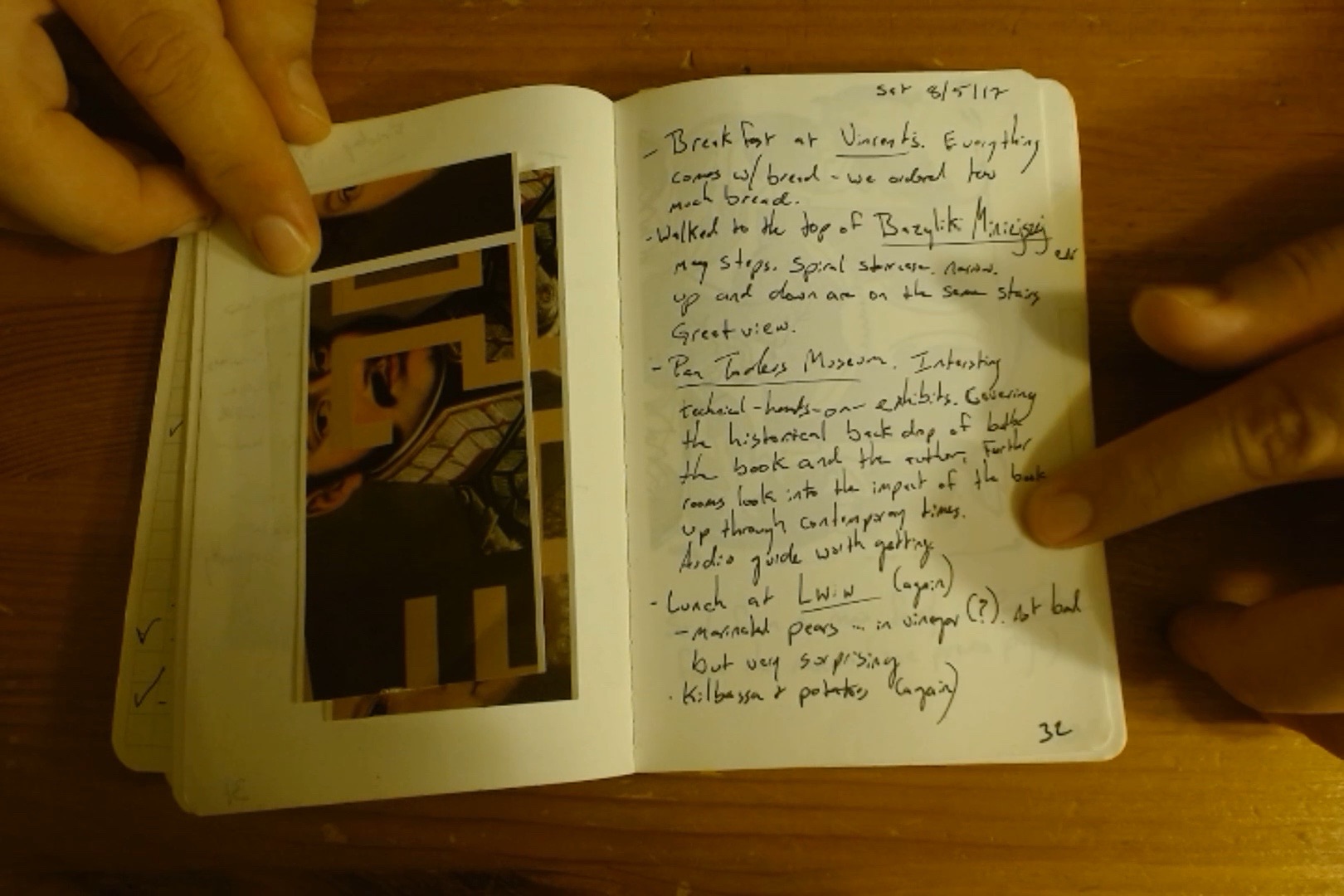
Breakfast at Café Vincent came with bread on everything. We ordered too much bread. Then we climbed to the top of St. Mary Magdalene’s Basilica: many steps, and the same stairs for going up and down, but a great view.

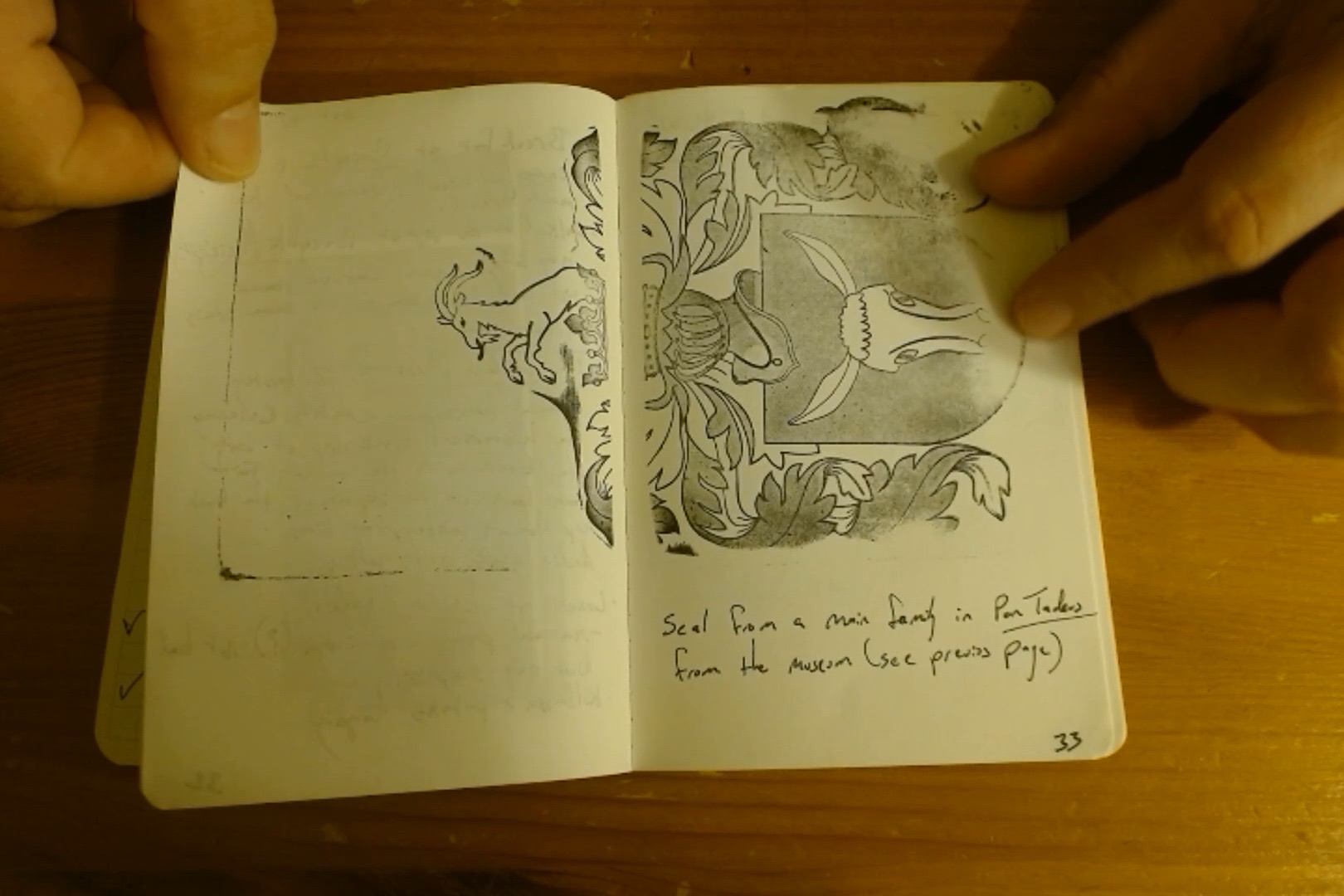
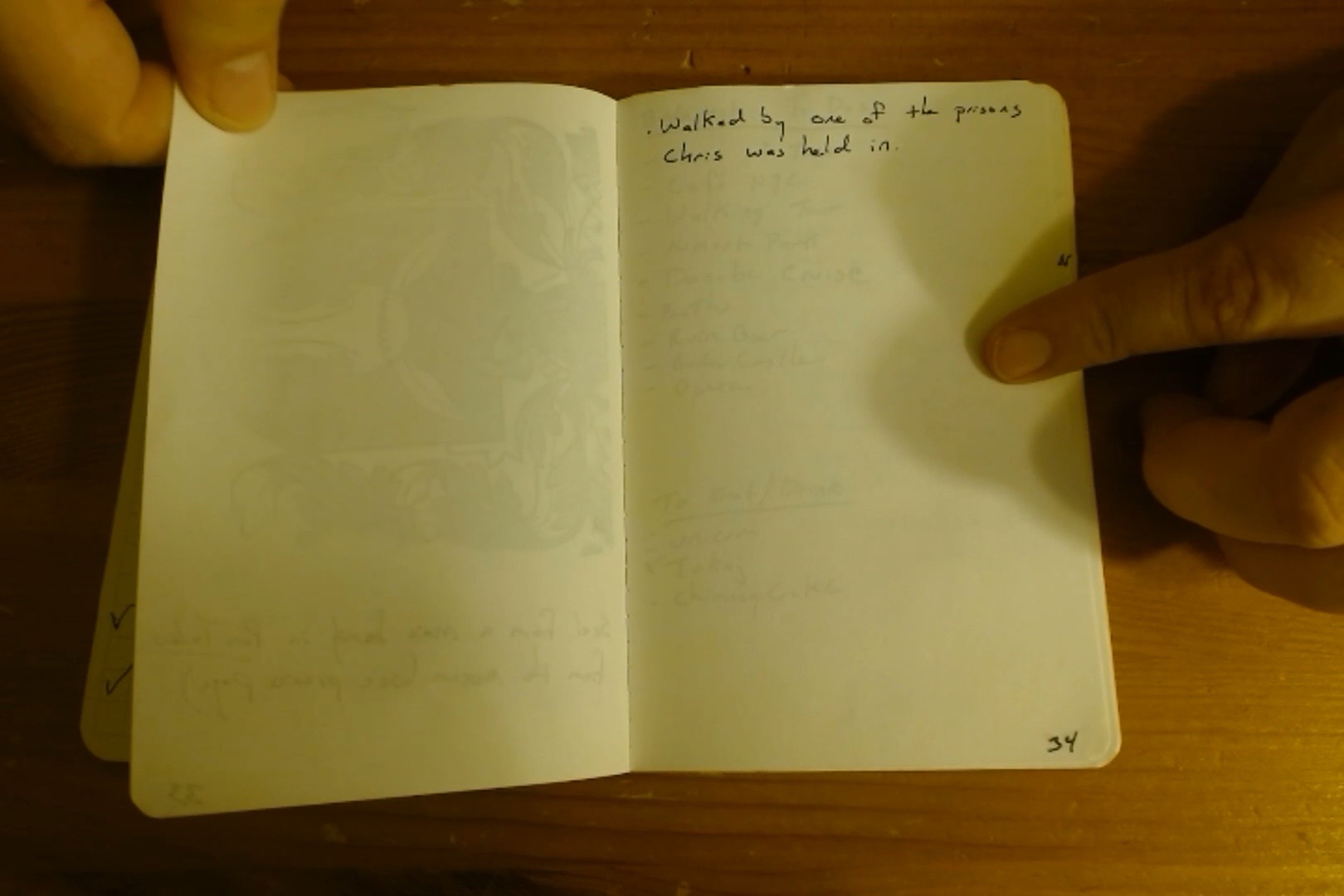
The Pan Tadeusz Museum had interesting rooms about the book and its author and an audio guide worth getting. One display had a seal from a noble family in the story. Lunch back at Karczma Lwowska was marinated pears in vinegar—odd, but surprisingly good—and kielbasa and potatoes. We walked past one of the prisons where Chris had been held.

Read the Poland trip summary.

From the Notebook

Poland 2017 notebook, page 32 Poland 2017 notebook, page 33 Poland 2017 notebook, page 34